Brazil Fan Travel
Brazil Weather in June and July: Every Host City of the 2027 Women's World Cup
Quick answer
It is winter in Brazil during the 2027 Women's World Cup, and the eight host cities split into three groups. Fortaleza, Recife and Salvador are warm, with daytime highs from 27 to 30 °C (81-86 °F), and Recife and Salvador are also rainy. Rio de Janeiro, São Paulo, Belo Horizonte and Brasília are mild and mostly dry. Porto Alegre is the coolest, with highs near 20 °C (68 °F) and lows near 10 °C (50 °F).
On this page
- What is the weather like in each host city in June and July?
- When does each host city play?
- Where is it warm and rainy: Recife, Salvador and Fortaleza?
- Where is it mild and dry: Rio, São Paulo, Belo Horizonte and Brasília?
- How cold does Porto Alegre get?
- What should you pack for the Brazilian winter?
- What do climate normals not tell you?
- FAQ
- Sources
The 2027 Women's World Cup is played in the Brazilian winter, and that word means something different in each of the eight host cities. In Fortaleza it is a beach-weather month with a daytime high near 30 °C (86 °F). In Porto Alegre it is a jacket month, with nights near 10 °C (50 °F).
The numbers below are 30-year averages published by INMET, the Brazilian national weather service, and I put June and July side by side for each host city. The tournament runs from June 24 to July 25, so both months matter. If you want the full trip plan, my Brazil travel guide for the World Cup covers the visa, the bases and the safety advice; this page is the weather deep dive.
What is the weather like in each host city in June and July?
Warm in the Northeast, mild in the Southeast and Brasília, cool in the South. The first table has the average daytime high and night low, the second one has the rain and the humidity. Each cell shows June first and July second.
| Host city | Daytime high | Night low |
|---|---|---|
| Belo Horizonte | 25 °C (77 °F) | 15 °C (59 °F) |
| Brasília | 25 / 26 °C (77 / 79 °F) | 14 °C (57 °F) |
| Fortaleza | 30 °C (86 °F) | 23 °C (73 °F) |
| Porto Alegre | 20 °C (68 °F) | 11 / 10 °C (52 / 50 °F) |
| Recife | 29 / 28 °C (84 / 82 °F) | 22 / 21 °C (72 / 70 °F) |
| Rio de Janeiro* | 27 / 26 °C (81 / 79 °F) | 19 °C (66 °F) |
| Salvador | 27 °C (81 °F) | 22 / 21 °C (72 / 70 °F) |
| São Paulo | 23 °C (73 °F) | 14 / 13 °C (57 / 55 °F) |
Average daytime high and night low in June / July. Source: INMET climate normals, 1991-2020 (*Rio de Janeiro: 1981-2010, see the note below). Fahrenheit is my conversion.
| Host city | Rain (monthly total) | Rain days | Days with 10 mm or more | Relative humidity |
|---|---|---|---|---|
| Belo Horizonte | 11 / 5.4 mm | 1 | 0 | 63 / 58% |
| Brasília | 3.3 / 1.5 mm | 1 / 0 | 0 | 59 / 51% |
| Fortaleza | 130 / 70 mm | 10 / 7 | 4 / 2 | 80 / 77% |
| Porto Alegre | 130 / 164 mm | 9 | 4 / 5 | 83 / 81% |
| Recife | 391 / 315 mm | 22 / 23 | 10 | 85 / 84% |
| Rio de Janeiro* | 33-56 / 44-52 mm | 5 / 5-6 | No figure | No figure |
| Salvador | 238 / 194 mm | 19 / 18 | 7 / 6 | 85 / 83% |
| São Paulo | 60 / 48 mm | 5 / 4 | 2 | 74 / 71% |
Rain and humidity in June / July. Rain is the monthly total, and "rain days" are days with at least 1 mm (0.04 in). Source: INMET climate normals, 1991-2020 (*Rio de Janeiro: 1981-2010, see the note below).
About the Rio de Janeiro row: the 1991-2020 tables have no station inside the city, so I used the 1981-2010 temperatures of the Rio de Janeiro station. For rain I show the range of three low-lying stations from that same period, Bangu, Realengo and Santa Cruz. Those numbers describe the lowlands. Up in the Tijuca forest, the Alto da Boa Vista hill station gets far more, 154 mm in June and 180 mm in July (6.1 and 7.1 in) in the 1991-2020 normals.
When does each host city play?
The weather of the day depends on when you are there, so here are the dates. The table is my tally from FIFA's official schedule, and it shows that Rio and São Paulo host the last week of the tournament, while Salvador, Recife, Brasília and Porto Alegre are done by July 13.
| Host city | Group stage | Knockout rounds |
|---|---|---|
| Rio de Janeiro | Jun 24, 26, 30; Jul 3, 5, 7 | Quarter-final Jul 16, semi-final Jul 21, final Jul 25 |
| São Paulo | Jun 25, 27, 29; Jul 1, 4, 8 | Round of 16 Jul 11, quarter-final Jul 17, semi-final Jul 20, bronze final Jul 24 |
| Belo Horizonte | Jun 26, 28, 30; Jul 2, 5, 7 | Round of 16 Jul 11, quarter-final Jul 16 |
| Fortaleza | Jun 26, 28; Jul 2, 4, 6, 8 | Round of 16 Jul 10 and 13, quarter-final Jul 17 |
| Brasília | Jun 25, 27; Jul 1, 4, 6, 8 | Round of 16 Jul 13 |
| Porto Alegre | Jun 26, 28, 30; Jul 3, 5, 8 | Round of 16 Jul 12 |
| Recife | Jun 27, 29; Jul 1, 3, 5, 7 | Round of 16 Jul 10 |
| Salvador | Jun 25, 27, 29; Jul 2, 4, 7 | Round of 16 Jul 12 |
Match dates by host city, 2027. Source: FIFA's official match schedule (version of Aug. 17, 2026; subject to change), my tally. Kick-off times are not published yet.
The dates are the part you can plan around today. The teams for each match, and the kick-off times, come after the draw on December 11, and I follow them in my guide to the 2027 schedule. Kick-off times matter for the weather, because the night lows in the first table are what you feel at an evening game.
Where is it warm and rainy: Recife, Salvador and Fortaleza?
These three cities are the warmest, and two of them are the wettest. Recife has the most rain of the eight cities, with 391 mm in June (15.4 in) and 315 mm in July (12.4 in), and rain on 22 to 23 days a month. On 10 days of each month it rains 10 mm (0.4 in) or more, so in Recife a downpour is part of a normal week. The highs are still warm, at about 28 °C (82 °F), and the humidity is the highest of the group at about 84%.
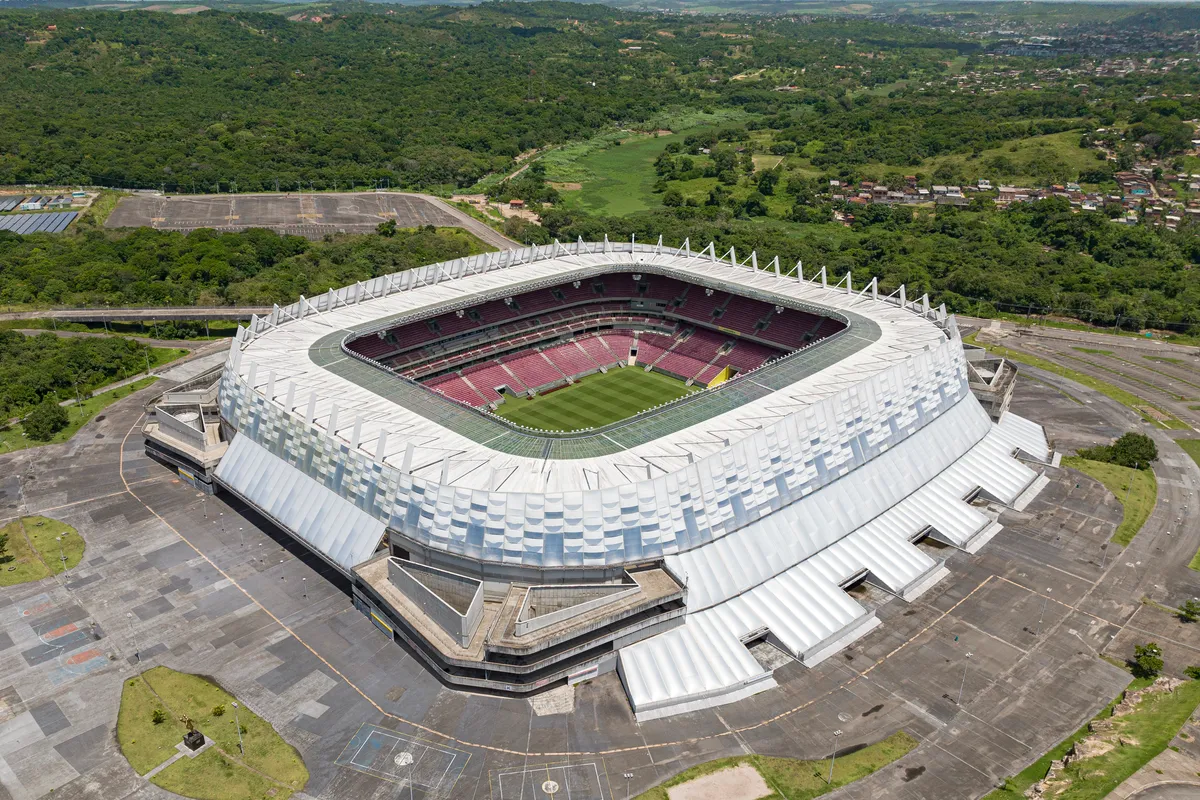
Salvador comes right after Recife, and the city has its own World Cup guide: 238 mm in June (9.4 in) and 194 mm in July (7.6 in), with rain on 18 or 19 days each month and highs near 27 °C (81 °F). Nights stay above 21 °C (70 °F). The rain there tends to be a pattern, not a washout: 6 to 7 days a month bring 10 mm or more, which leaves most of the rain days as light showers.
Fortaleza is the hot one. The daytime high is near 30 °C (86 °F) in both months, and INMET counts 24 days a month at 30 °C (86 °F) or above. Rain is much lighter than in Recife and Salvador, 130 mm in June (5.1 in) and 70 mm in July (2.7 in), on 10 and 7 days. Fortaleza also has the most sunshine of the three, 219 hours in June and 254 in July. My pick for the lightest packing list is Fortaleza, because besides summer clothes you only need a cap, sun protection and a light layer for the rain days.
Where is it mild and dry: Rio, São Paulo, Belo Horizonte and Brasília?
This is the group where the sun is out and the air is comfortable. The highs sit between 23 and 27 °C (73-81 °F) and the lows between 13 and 19 °C (55-66 °F). In Brasília, Belo Horizonte and São Paulo the gap between day and night is about 10 degrees, wider than in the Northeast.
- Brasília is the driest city on the list: 3 mm in June and 1.5 mm in July (0.1 and 0.06 in), with rain on about one day a month in June and none in July. It is also the sunniest, with 248 hours of sun in June and 268 in July, and the humidity falls to 51% in July. The nights are cool, at about 14 °C (57 °F), so the day is warm and the evening needs a layer.
- Belo Horizonte is nearly as dry, with 11 mm in June and 5 mm in July (0.4 and 0.2 in) and one rain day a month. The high is 25 °C (77 °F) and the low about 15 °C (59 °F), with 224 to 237 hours of sunshine.
- São Paulo is a bit cooler and wetter: a high of 23 °C (73 °F), a low of 13 °C (55 °F), and rain totals of 60 mm in June and 48 mm in July (2.4 and 1.9 in), on 4 to 5 days. The stadium details are in my São Paulo guide.
- Rio de Janeiro is the warmest of the four, with highs near 26 to 27 °C (79-81 °F) and lows near 19 °C (66 °F) on the older INMET normals, and rain on 5 to 6 days a month in the lowlands. The hills of the Tijuca forest get far more rain than the lowlands, as the note under the tables says. The Maracanã details are in my Rio guide.
How cold does Porto Alegre get?
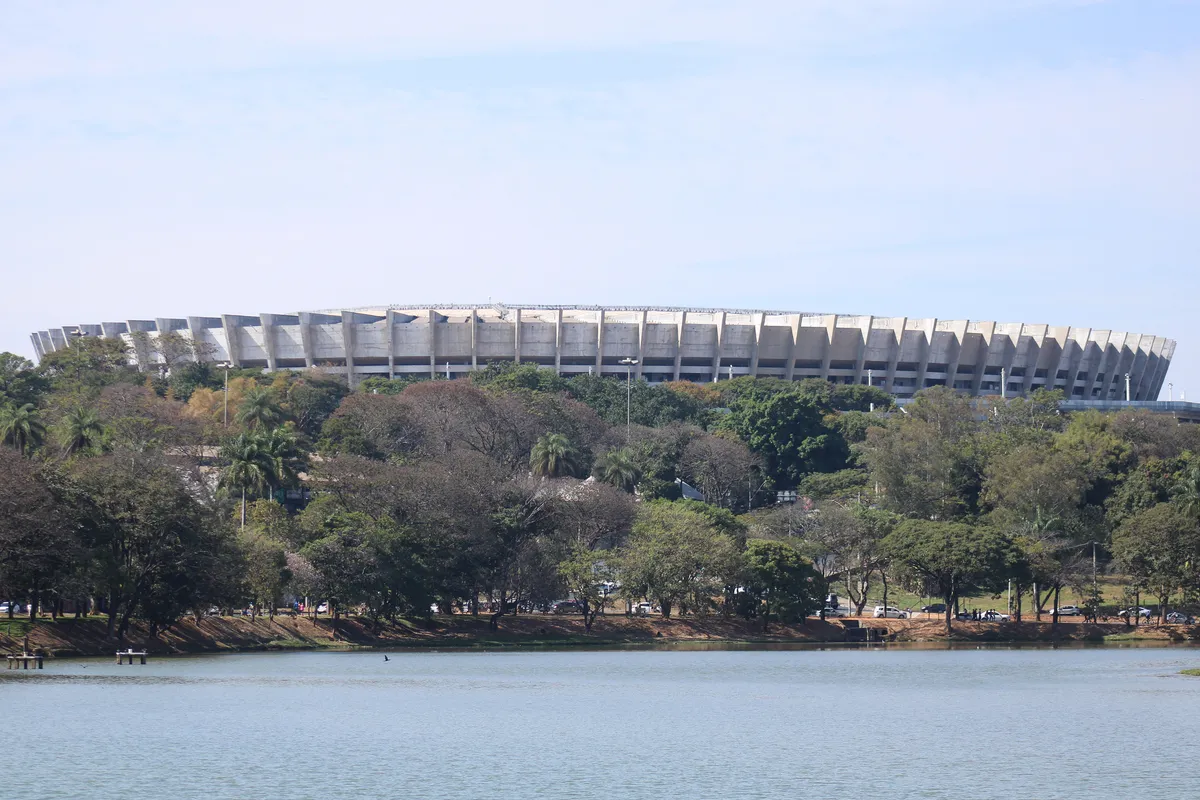
It is the one host city where winter feels like winter. The average high is about 20 °C (68 °F) in both months, and the average night low is 11 °C (52 °F) in June and 10 °C (50 °F) in July, the lowest of the eight. It also has the least sun, only 119 hours in June and 134 in July, about half of what Brasília gets, and the humidity is high, at 81 to 83%.
Rain falls on 9 days a month, with 130 mm in June (5.1 in) and 164 mm in July (6.4 in), and on 4 to 5 days a month it is 10 mm or more. These are averages, so a single day can be warmer or cooler, but the picture is clear: if your trip is only Porto Alegre, pack for cool, damp days with little sun.
What should you pack for the Brazilian winter?
The packing list depends on the cities, and a multi-city trip needs the union of them. This is how I would split it:
- Always: a light layer for the evening, and a compact rain jacket if your route includes Recife, Salvador, Fortaleza, Porto Alegre or São Paulo.
- Recife and Salvador: quick-drying clothes and shoes you do not mind getting wet. With humidity near 84%, cotton dries slowly.
- Fortaleza: summer clothes, sunscreen and a cap. A heavy jacket is wasted weight there.
- Rio, São Paulo, Belo Horizonte and Brasília: short sleeves for the day and a sweater or light jacket for the night, since lows go down to 13 to 15 °C (55-59 °F) in São Paulo, Belo Horizonte and Brasília.
- Porto Alegre: a real jacket, long pants and a layer under it. It is the only host city where I would bring a warm coat.
If you are planning a route through several cities, my guide to the distances, flights and travel times between host cities shows which cities are close enough to share one suitcase, and Rio, São Paulo and Belo Horizonte together are the easiest on the weather, since all three share a mild pattern.
What do climate normals not tell you?
A normal is a 30-year average, so it describes a typical June or July, not a forecast. A cold spell can make a single day in the South or the Southeast cooler than the averages, and a wet week can be wetter than they suggest. The tables also do not say whether a rain day means a 10-minute shower or an afternoon of rain. INMET's count of days with 10 mm or more is the closest the normals come to that.
Three things are still open as of November 2, 2026. FIFA has not published the kick-off times, so I cannot tell you whether a given match is in the warm afternoon or the cool evening. The teams for each game are not set, so you do not know the dates for your team. And tickets are not on sale yet, as my tickets guide explains. For safety, which is a separate question from weather, see my guide on staying safe at the World Cup, and if you plan to add a beach or a trip beyond the stadiums, my guide to extensions beyond the stadiums has the options.
Frequently asked questions
What is the weather in Brazil during the 2027 Women's World Cup?
It is winter, and it varies by city. Fortaleza, Recife and Salvador are warm, from 27 to 30 °C (81-86 °F) by day, and Recife and Salvador are rainy. Rio, São Paulo, Belo Horizonte and Brasília are mild and mostly dry. Porto Alegre is the coolest, with highs near 20 °C (68 °F), according to INMET's normals.
Which host city is the rainiest in June and July?
Recife, with 391 mm of rain in June (15.4 in) and 315 mm in July (12.4 in), on 22 to 23 days a month, according to INMET. Salvador is next, with 238 mm in June and 194 mm in July, and rain on 18 to 19 days a month.
Which host city is the coldest?
Porto Alegre. INMET's normals show an average high of about 20 °C (68 °F) and a night low of 10 to 11 °C (50-52 °F) in June and July. São Paulo is the second coolest, with highs near 23 °C (73 °F) and lows of 13 °C (55 °F).
Which host city is the driest?
Brasília, with 3 mm of rain in June and 1.5 mm in July (0.1 and 0.06 in), and rain on about one day in June and none in July. Belo Horizonte is close behind, with 11 mm in June and 5 mm in July.
Is it hot in Brazil in June and July?
Only in Fortaleza. It has highs near 30 °C (86 °F) and 24 days a month above 30 °C (86 °F). Elsewhere the highs are between 20 and 28 °C (68-82 °F), and nights can be cool, especially in São Paulo, Brasília, Belo Horizonte and Porto Alegre.
Do I need a jacket for the World Cup in Brazil?
Yes, in most cities. A light rain jacket works everywhere, and a sweater helps for the evenings in São Paulo, Belo Horizonte, Brasília and Rio. Porto Alegre needs a real jacket. Fortaleza, Recife and Salvador are warm enough that a rain jacket is all you need.
Can I know if it will rain on match day?
No, climate normals are averages, not forecasts. They tell you that rain is very likely in Recife and Salvador, and very unlikely in Brasília and Belo Horizonte. Check the forecast a few days before each match, and note that FIFA has not published kick-off times yet.
Sources
- INMET: Normais Climatológicas do Brasil, 1991-2020 and 1981-2010 (portal page), read Nov. 2, 2026
- INMET: Maximum temperature, monthly and annual normals, 1991-2020, read Nov. 2, 2026
- INMET: Minimum temperature, monthly and annual normals, 1991-2020, read Nov. 2, 2026
- INMET: Accumulated rainfall, monthly and annual normals, 1991-2020, read Nov. 2, 2026
- INMET: Days with rainfall of 1 mm or more, 1991-2020, read Nov. 2, 2026
- INMET: Days with rainfall of 10 mm or more, 1991-2020, read Nov. 2, 2026
- INMET: Relative humidity, monthly and annual normals, 1991-2020, read Nov. 2, 2026
- INMET: Total sunshine hours, monthly and annual normals, 1991-2020, read Nov. 2, 2026
- INMET: Maximum temperature normals, 1981-2010 (Rio de Janeiro station), read Nov. 2, 2026
- INMET: Accumulated rainfall normals, 1981-2010 (Bangu, Realengo and Santa Cruz stations), read Nov. 2, 2026
- FIFA: Women's World Cup Brazil 2027 match schedule, PDF (version of Aug. 17, 2026), read Nov. 2, 2026

Founder and editor, WoSo Arena
I spent five years in the United States, where girls' and women's games filled the parks and school fields of Los Angeles. Every article starts from official sources, listed at the end.