Brazil Fan Travel
Brazil's Host Cities: Distances, Flights and Travel Times
Quick answer
The eight host cities of the 2027 Women's World Cup are far apart. The closest pair, Rio de Janeiro and Belo Horizonte, is 212 miles (342 km) in a straight line, and the farthest, Porto Alegre and Fortaleza, is almost 2,000 miles (3,215 km). Only Rio, São Paulo and Belo Horizonte sit within about 300 miles of each other. For every other pair, plan on flying, and leave a night between matches.
On this page
The eight host cities of the 2027 Women's World Cup are spread across a country the size of a continent. A fan who treats "Brazil" as one place will book the wrong trip: some host cities are a short flight apart, and some are on opposite ends of the country.
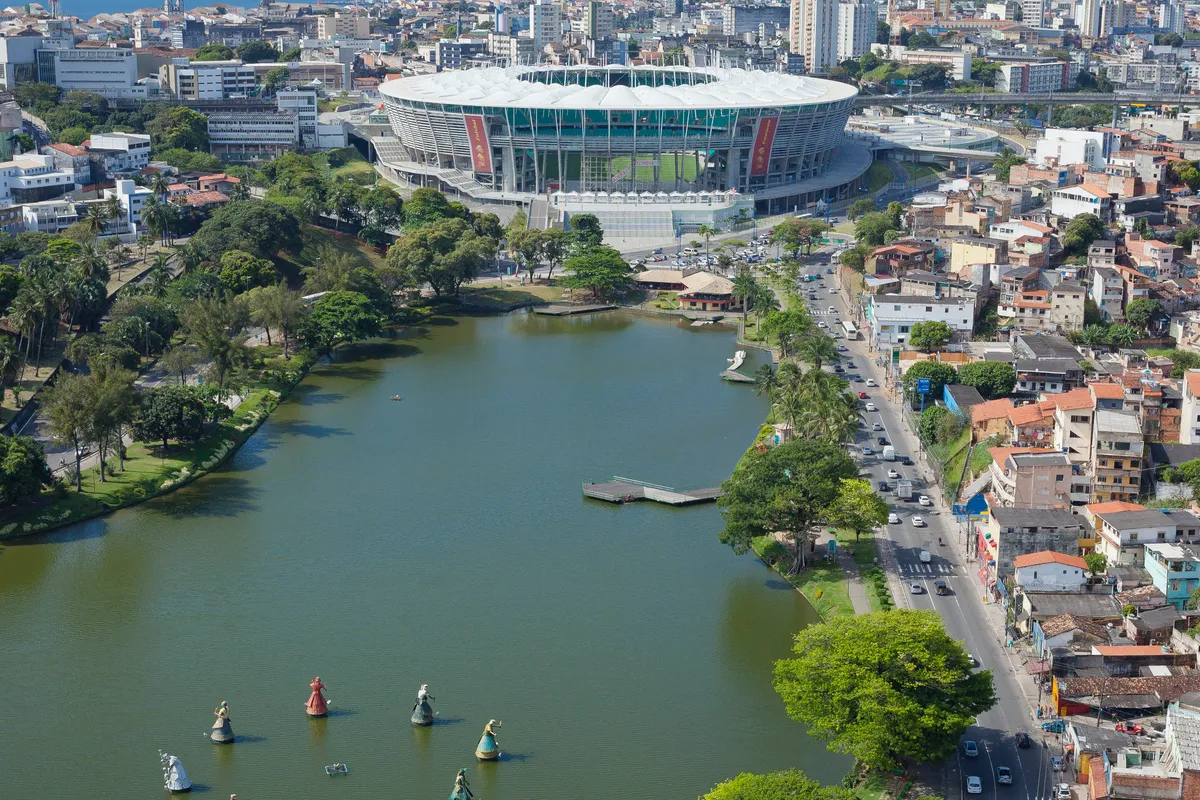
I live in Salvador, one of the eight. This guide shows how far apart the cities are, which airports to use, what the flights and buses take, and five sample routes for fans who want two or three matches. For dates and stadiums, see the 2027 Women's World Cup schedule. This site is independent and not affiliated with FIFA.
How far apart are the eight host cities?
Here are all 28 pairs. The numbers are straight lines between the city centers, so real flights and roads are longer. Read across from a city in the left column.
| From | São Paulo | Belo Horizonte | Brasília | Porto Alegre | Salvador | Recife | Fortaleza |
|---|---|---|---|---|---|---|---|
| Rio de Janeiro | 224 mi (361 km) | 212 mi (342 km) | 579 mi (932 km) | 700 mi (1,126 km) | 751 mi (1,209 km) | 1,165 mi (1,875 km) | 1,361 mi (2,190 km) |
| São Paulo | – | 305 mi (491 km) | 542 mi (872 km) | 530 mi (852 km) | 904 mi (1,455 km) | 1,324 mi (2,131 km) | 1,472 mi (2,370 km) |
| Belo Horizonte | – | – | 385 mi (620 km) | 834 mi (1,342 km) | 599 mi (965 km) | 1,020 mi (1,641 km) | 1,176 mi (1,893 km) |
| Brasília | – | – | – | 1,006 mi (1,620 km) | 657 mi (1,058 km) | 1,029 mi (1,655 km) | 1,048 mi (1,687 km) |
| Porto Alegre | – | – | – | – | 1,432 mi (2,304 km) | 1,851 mi (2,979 km) | 1,998 mi (3,215 km) |
| Salvador | – | – | – | – | – | 420 mi (676 km) | 639 mi (1,028 km) |
| Recife | – | – | – | – | – | – | 390 mi (627 km) |
Straight-line distance between the eight host cities (our calculation, from the center of each city). Roads run longer: the Rio to São Paulo highway is about 430 km, against 361 km in a straight line.
Three things stand out:
- Only five pairs are under 400 miles: Rio and Belo Horizonte (212), Rio and São Paulo (224), São Paulo and Belo Horizonte (305), Belo Horizonte and Brasília (385) and Recife and Fortaleza (390). Everything else is longer, and most pairs are several hundred miles longer.
- The Southeast trio, Rio, São Paulo and Belo Horizonte, is the tightest cluster. Together they host 27 of the 64 matches, including the opening game, both semi-finals, the bronze final and the final, in our tally from FIFA's schedule.
- Porto Alegre is the outlier. The closest host city to it is São Paulo, at 530 miles, and Fortaleza is almost 2,000 miles away. Brasília is also on its own, with Belo Horizonte as its nearest neighbor.
The Northeast trio is the other cluster. Salvador, Recife and Fortaleza are 420, 390 and 639 miles apart, so they work as one trip, but they are not close. For visas, weather and safety across all eight cities, see our guide to traveling to Brazil for the Women's World Cup.
Which airports serve the host cities?
Two of the eight cities have two big airports, and picking the wrong one can add an hour to your day. LATAM, GOL and Azul, the three big domestic airlines, fly between most of these cities, according to the airports' destination lists on Wikipedia.
| City | Airport | From downtown | Good to know |
|---|---|---|---|
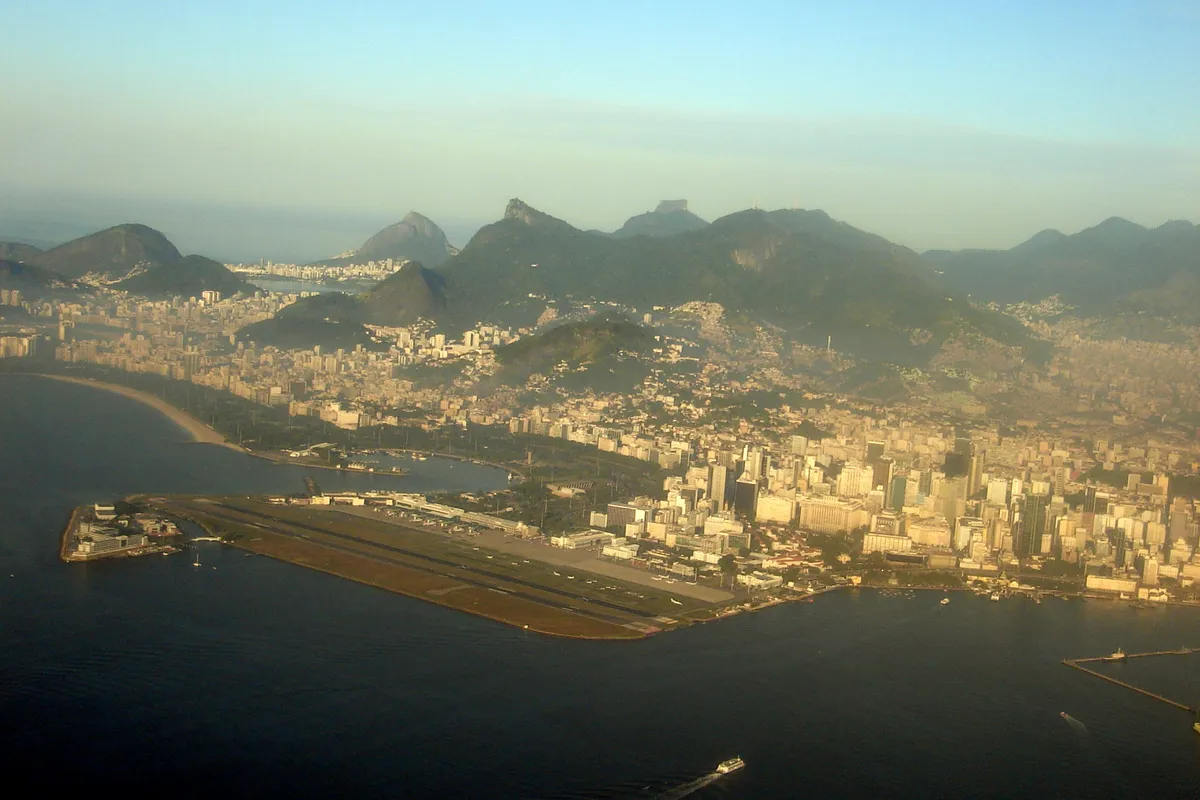
| Rio de Janeiro | Santos Dumont (SDU) | Next to the financial center | The close-in airport, with flights to São Paulo's Congonhas and Guarulhos and to Belo Horizonte |
| Rio de Janeiro | Galeão (GIG) | About 12 mi (20 km) | The BRT TransCarioca bus line runs from the terminals, 24 hours a day |
| São Paulo | Congonhas (CGH) | About 5 mi (8 km) | Close to the business districts, and much easier to get around São Paulo from than Guarulhos, but in practice only for domestic flights; 24.5 million passengers in 2025 |
| São Paulo | Guarulhos (GRU) | About 16 mi (25 km) | The busiest airport in this table, with 47.2 million passengers in 2025; CPTM Line 13 train link |
| Belo Horizonte | Confins (CNF) | About 27 mi (44 km) | Far out. The nearer Pampulha airport has been limited to aircraft of up to 50 passengers since 2005 |
| Brasília | Brasília (BSB) | About 8 mi (13 km) | Buses 102 and 102.1 run to the central bus station; the metro does not reach the terminal |
| Porto Alegre | Salgado Filho (POA) | About 6 mi (9 km) | A people mover links the terminal to the metro's Airport station |
| Salvador | Deputado Luís Eduardo Magalhães (SSA) | About 17 mi (28 km) | The last stop of metro Line 2 |
| Recife | Guararapes (REC) | About 9 mi (14 km) | The metro's Airport station is a covered walk from the terminal |
| Fortaleza | Pinto Martins (FOR) | About 5 mi (8 km) | South of the center |
Main airports of the host cities. Distances from downtown are as given by Wikipedia, rounded. Rail and metro links are as listed on the same pages, read Oct. 27, 2026.
When you search for fares, check which airport each result uses: Rio and São Paulo each have a closer-in airport and a bigger one farther out. For a domestic flight into or out of São Paulo, I would pick Congonhas: getting to and from the city is much easier than with Guarulhos. International flights use Guarulhos. In Belo Horizonte, almost everything lands at Confins, 27 miles from the city, so count the transfer in your plan. I live in Salvador, where the airport is on the metro and the stadium is on the same system, a combination I explain in our Salvador guide for World Cup fans.
How long are the flights between host cities?
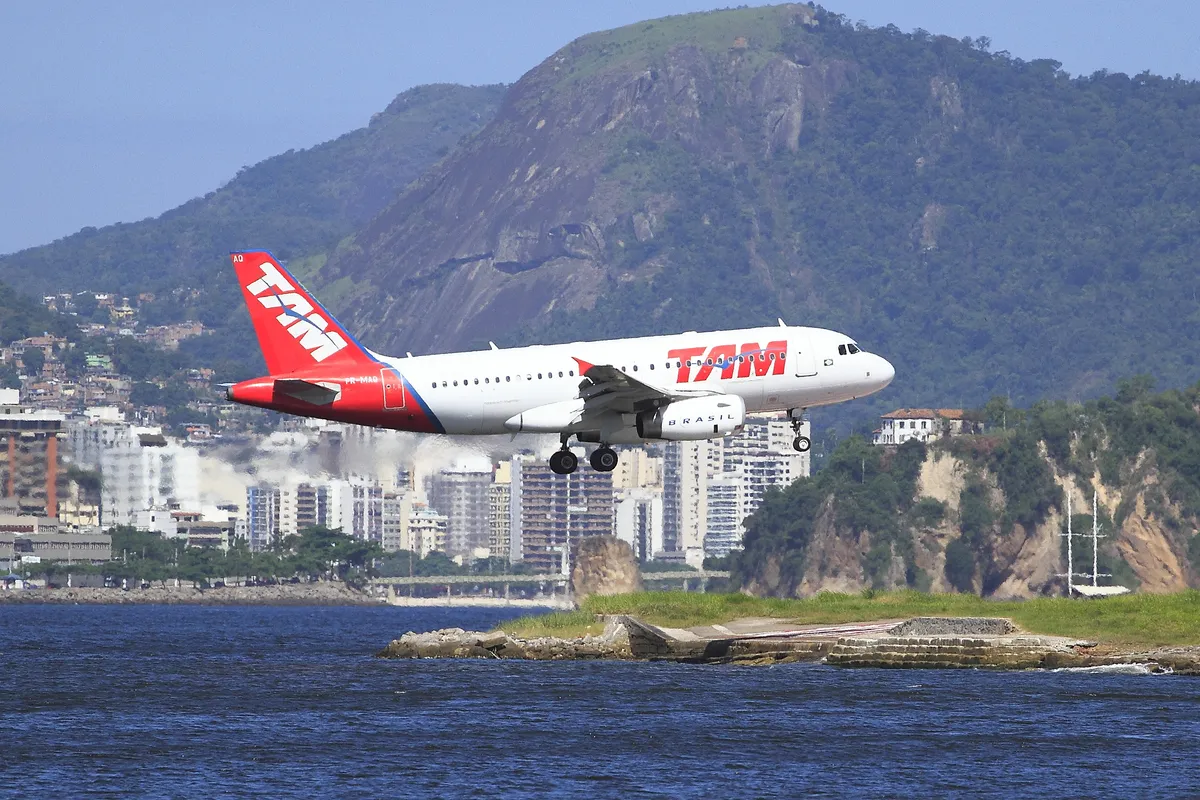
Shorter than most fans expect for the distance. Between the Southeast cities, Belo Horizonte and Brasília, and from Salvador to Recife, you are in the air for about an hour to an hour and a half. The longest hop in the table, Rio to Salvador, takes about two hours.
| Route | Flight time | Nonstop airlines | Straight line |
|---|---|---|---|
| Rio de Janeiro to Belo Horizonte | 1 h 05 to 1 h 10 | Azul, GOL | 212 mi (342 km) |
| Rio de Janeiro to São Paulo | 1 h 15 to 1 h 20 | GOL, LATAM | 224 mi (361 km) |
| São Paulo to Belo Horizonte | 1 h 10 to 1 h 20 | Azul, GOL, LATAM | 305 mi (491 km) |
| Brasília to Belo Horizonte | 1 h 16 (LATAM average) | LATAM, about 19 a week | 385 mi (620 km) |
| Salvador to Recife | 1 h 15 to 1 h 20 | Azul | 420 mi (676 km) |
| São Paulo to Brasília | 1 h 42 (LATAM average) | LATAM, about 44 a week | 542 mi (872 km) |
| Rio de Janeiro to Salvador | 2 h to 2 h 05 | GOL, LATAM (about 13 a week) | 751 mi (1,209 km) |
Nonstop flight times between host cities. LATAM rows: average time on LATAM's Brazil route pages, read Oct. 27, 2026. Other rows: durations shown by Google Flights and Skyscanner for one-way flights on Nov. 17, 2026 (a sample date), from Rio's Galeão (GIG), São Paulo's Guarulhos (GRU) and Congonhas (CGH), Belo Horizonte's Confins (CNF) and Salvador (SSA). Times vary a few minutes by flight, airline and season.
Rio to Salvador also has cheaper itineraries with a stop, and those take from 4 h 25 min to more than 5 hours, so filter for nonstop flights when you search. I did not check the Northeast pairs that include Fortaleza or any flight from Porto Alegre, so I will not quote a time for them. The airlines show the exact time for each flight when you search.
What the air time does not include is the rest of the day. A 1 h 05 min flight from Rio to Belo Horizonte still means a ride to the airport, a wait, and a 27-mile transfer from Confins. I would count most of a morning, and I would not plan a match for the same day as a flight.
Can you travel between host cities by bus?
Between the Southeast cities, yes. Brazil's long-distance buses are a normal way to travel, and the BlaBlaCar Brasil travel blog lists these times for 2026:
| Route | Average time | By road | Departures |
|---|---|---|---|
| Rio de Janeiro to São Paulo | About 6 h (5 h 30 to 7 h) | About 267 mi (430 km) | About 96 a day |
| Rio de Janeiro to Belo Horizonte | About 7 h (6 h 30 to 8 h) | About 273 mi (440 km) | About 16 a day |
| Salvador to Recife | 13 to 15 h | More than 500 mi (800 km) | Several companies |
Bus trips between host cities, as listed by the BlaBlaCar Brasil blog (June 2026). Times vary with traffic and stops; confirm schedules with the bus company.
Rio to São Paulo is the one bus route that works as a match-to-match trip: about six hours on the Presidente Dutra highway, with 96 departures a day. For Rio to Belo Horizonte, seven hours is long enough that some fans will prefer a flight. Salvador to Recife by bus is a day of travel, so I would fly, and the same goes for every pair that is not in the Southeast. If you do take a long-distance bus in the Northeast, note that the Salvador buses leave from the Pernambués bus terminal and arrive at Recife's TIP terminal, not at the stadiums.
How do you plan a trip with two or three matches?
These are five routes I would consider, built from FIFA's match schedule. The teams are not known until the draw on December 11, 2026, so I only name dates and cities. They are examples, not recommendations: pick the matches first, and then check the times.
| Route | Matches | What the trip takes |
|---|---|---|
| Follow Brazil's group games | June 24 Rio de Janeiro (opening match), June 29 São Paulo, July 4 Brasília | Five days between stops. Rio to São Paulo is 224 mi, and São Paulo to Brasília is 542 mi, a flight LATAM lists at 1 h 42 min |
| Opening weekend in the Southeast | June 24 Rio de Janeiro, June 25 São Paulo, June 26 Belo Horizonte | Three cities in three days. It only works if the kick-off times leave room for a flight or a bus ride each night |
| The Northeast trio | June 27 Salvador, June 29 Recife, July 2 Fortaleza | Two to three days between matches, with 420 mi from Salvador to Recife and 390 mi from Recife to Fortaleza |
| Round of 16 in the Northeast | July 10 Recife, July 12 Salvador | Two days apart, with a nonstop flight of about 1 h 20 min between the cities. Fortaleza has a Round of 16 game on July 10 and another on July 13 |
| The final stretch | July 20 São Paulo (semi-final), July 21 Rio (semi-final), July 24 São Paulo (bronze final), July 25 Rio (final) | Two cities, 224 mi apart. Pick one as your base and go back and forth by bus (about six hours) or by air (about 1 h 15 min) |
Sample routes for the 2027 Women's World Cup (our selection, from FIFA's match schedule of Aug. 17, 2026). Kick-off times have not been published.
The first and last routes are the easiest. Brazil's own games are five days apart, and the last week is built around two cities that are only 224 miles away from each other. The weakest plan is the opening weekend: three matches in three cities in three days is possible on paper, but until FIFA publishes the kick-off times, I would not book it. The Northeast trio is the best of the three-match routes, because every leg has at least a day between matches.
If you only want one region, choose the Southeast. Rio, São Paulo and Belo Horizonte host the most matches and have the most flights and buses, as the tables above show. If you want a more relaxed trip, choose two cities and use the days in between to see the place you are in. For the tournament calendar itself, see the knockout schedule.
What should you check before you book?
Four things are still open as of October 27, 2026, and each one changes a route:
- Kick-off times. FIFA's schedule shows the dates and cities but says the times come later. A night match followed by a morning flight is a different trip from an afternoon match.
- The teams. The final draw is on December 11, 2026, in Rio de Janeiro. If you are following one team, wait for it before you build a route. Our guide to the teams that have qualified so far shows who is already in, and the USWNT road to Brazil explains where the U.S. stands.
- Tickets. They are not on sale, and the official channel is FIFA's. Read the ticket guide before you pay anyone.
- Your paperwork. U.S. citizens need an e-visa, and the visa guide says when to apply. The visa does not depend on flight bookings, so you can do it first.
Flights and hotels should come last. If you decide sooner, book fares you can change. For the weather in each city in June and July, see the weather table, and for watching matches from home instead, the guide to watching in the U.S..
What will be updated?
This guide will change after the December 11 draw, when the teams and times are known, and when FIFA opens ticket sales. I will also add flight times for the pairs I have not checked yet. More guides are in Brazil Fan Travel and World Cup 2027. You can read who writes them on the About page, and how we check sources on How we write.
Frequently asked questions
Which two host cities of the 2027 Women's World Cup are the closest?
Rio de Janeiro and Belo Horizonte, 212 miles (342 km) apart in a straight line, followed by Rio and São Paulo at 224 miles (361 km). Both distances are our calculation from the center of each city.
Which host cities are the farthest apart?
Porto Alegre in the south and Fortaleza in the Northeast are almost 2,000 miles (3,215 km) apart in a straight line. Porto Alegre is also more than 1,800 miles from Recife.
How long is the bus from Rio de Janeiro to São Paulo?
About six hours, from 5 h 30 min to 7 h depending on traffic, over roughly 430 km on the Presidente Dutra highway, with about 96 departures a day, according to the BlaBlaCar Brasil blog (June 2026).
How long is the flight from Rio de Janeiro to São Paulo?
About 1 hour 15 to 20 minutes nonstop, according to Google Flights and Skyscanner for a sample date of November 17, 2026. GOL and LATAM fly the route, and the bus takes about six hours.
How long is the flight from São Paulo to Brasília?
LATAM lists an average of 1 hour 42 minutes, with about 44 nonstop flights a week. GOL and Azul also serve Brazil's main routes, and times vary by flight.
Can I take a bus from Salvador to Recife?
Yes, but it takes 13 to 15 hours over more than 800 km, according to the BlaBlaCar Brasil blog (June 2026). Azul flies the route nonstop in about 1 hour 15 to 20 minutes, according to Google Flights and Skyscanner for a sample date of November 17, 2026.
Which airport should I use in Rio and São Paulo?
Santos Dumont in Rio is next to the financial center, and Congonhas in São Paulo is about 5 miles from downtown, so they are the close-in airports, and Congonhas is the easier one to get around São Paulo from, for domestic flights. Galeão (12 miles out) and Guarulhos (16 miles out) are the bigger, farther ones, with more international flights.
Can I see matches in two cities on consecutive days?
Only between Rio, São Paulo and Belo Horizonte, and only when the kick-off times allow it. FIFA has not published the times, so wait before booking a route that depends on a flight or bus the next morning.
Sources
- FIFA: Women's World Cup Brazil 2027 match schedule, PDF (version of Aug. 17, 2026), read Oct. 27, 2026
- LATAM: Voos de Rio de Janeiro para Salvador (average duration and weekly frequency), read Oct. 27, 2026
- LATAM: Voos de São Paulo para Brasília, read Oct. 27, 2026
- LATAM: Voos de Brasília para Belo Horizonte, read Oct. 27, 2026
- Google Flights: nonstop flight times for Rio-São Paulo, Rio-Belo Horizonte, São Paulo-Belo Horizonte, Rio-Salvador and Salvador-Recife, one-way flights on Nov. 17, 2026 (searched Oct. 27, 2026)
- Skyscanner: the same routes and date, searched Oct. 27, 2026
- BlaBlaCar Brasil: Ônibus de São Paulo para o Rio de Janeiro (June 5, 2026)
- BlaBlaCar Brasil: Ônibus de Belo Horizonte para o Rio de Janeiro, read Oct. 27, 2026
- BlaBlaCar Brasil: Ônibus de Salvador para Recife (June 14, 2026)
- Wikipedia: Santos Dumont Airport (location, destinations)
- Wikipedia: Rio de Janeiro/Galeão International Airport (distance, BRT)
- Wikipedia: São Paulo/Guarulhos International Airport (distance, passengers, rail link)
- Wikipedia: São Paulo-Congonhas Airport (distance, passengers)
- Wikipedia: Tancredo Neves International Airport, Confins (distance, Pampulha limit)
- Wikipedia: Brasília International Airport (distance, buses)
- Wikipedia: Salgado Filho International Airport, Porto Alegre (distance, people mover)
- Wikipedia: Salvador International Airport (distance, destinations and airlines)
- Wikipedia: Recife/Guararapes-Gilberto Freyre International Airport (distance, metro)
- Wikipedia: Pinto Martins International Airport, Fortaleza (distance)

Founder and editor, WoSo Arena
I live in Salvador, Brazil, one of the eight host cities of the 2027 Women's World Cup, and I spent five years in the United States, where girls' and women's games filled the parks and school fields of Los Angeles. Every article starts from official sources, listed at the end.