Brazil Fan Travel
Rio de Janeiro for World Cup Fans: Maracanã Guide
Quick answer
Rio de Janeiro hosts nine matches of the 2027 Women's World Cup, from the June 24 opener with Brazil to the July 25 final, all at the Maracanã. The metro stop closest to the stadium is Rei Pelé - Maracanã on Line 2, and São Cristóvão serves the other side. Teams and kick-off times are not set until the December 11 draw.
On this page
- Which matches does Rio host in 2027?
- What is the Maracanã like?
- How do you get to the Maracanã?
- Where should you stay in Rio?
- What is there to see in Rio besides the stadium?
- What is the weather in Rio in June and July?
- Is Rio safe for World Cup fans?
- Can you combine Rio with São Paulo or Belo Horizonte?
- What is still undecided about Rio?
- FAQ
- Sources
The Maracanã is the stadium most fans picture when they think of Brazil, and in 2027 it hosts the opening match, one semi-final and the final of the Women's World Cup. I live in Salvador, not in Rio, so this guide leans on the official transport pages and on FIFA's schedule, and I say so where I could not check something.
Here are the nine matches, how to get to the stadium, where to stay, what to see and what the weather is like. For the full tournament calendar, see the 2027 Women's World Cup schedule, and for visas, money and the other seven cities, our Brazil travel guide.
Which matches does Rio host in 2027?
Nine: six group games, one quarter-final, one semi-final and the final. Rio is where the tournament starts and where it ends.
| Date | Day | Stage |
|---|---|---|
| June 24 | Thursday | Group A, opening match (Brazil) |
| June 26 | Saturday | Group D |
| June 30 | Wednesday | Group C |
| July 3 | Saturday | Group G |
| July 5 | Monday | Group B |
| July 7 | Wednesday | Group F |
| July 16 | Friday | Quarter-final |
| July 21 | Wednesday | Semi-final |
| July 25 | Sunday | Final |
Matches at the Estádio do Maracanã, Rio de Janeiro. Dates and stages are from FIFA's official schedule (version of Aug. 17, 2026). Teams are not set until the draw on Dec. 11, 2026, and kick-off times have not been published.
Brazil play the opener on June 24 at the Maracanã. After that, the hosts play in São Paulo on June 29 and in Brasília on July 4, so Rio is not on their group path again. If your plan is to follow the hosts, our guide to the Brazil team has the three home games and the squad. Once the draw is done, our list of qualified teams will show who is already in.
Tickets are not on sale yet. On FIFA's tickets page, the only option I found is to register your interest, and our guide to 2027 Women's World Cup tickets explains what is official and what to avoid.
What is the Maracanã like?
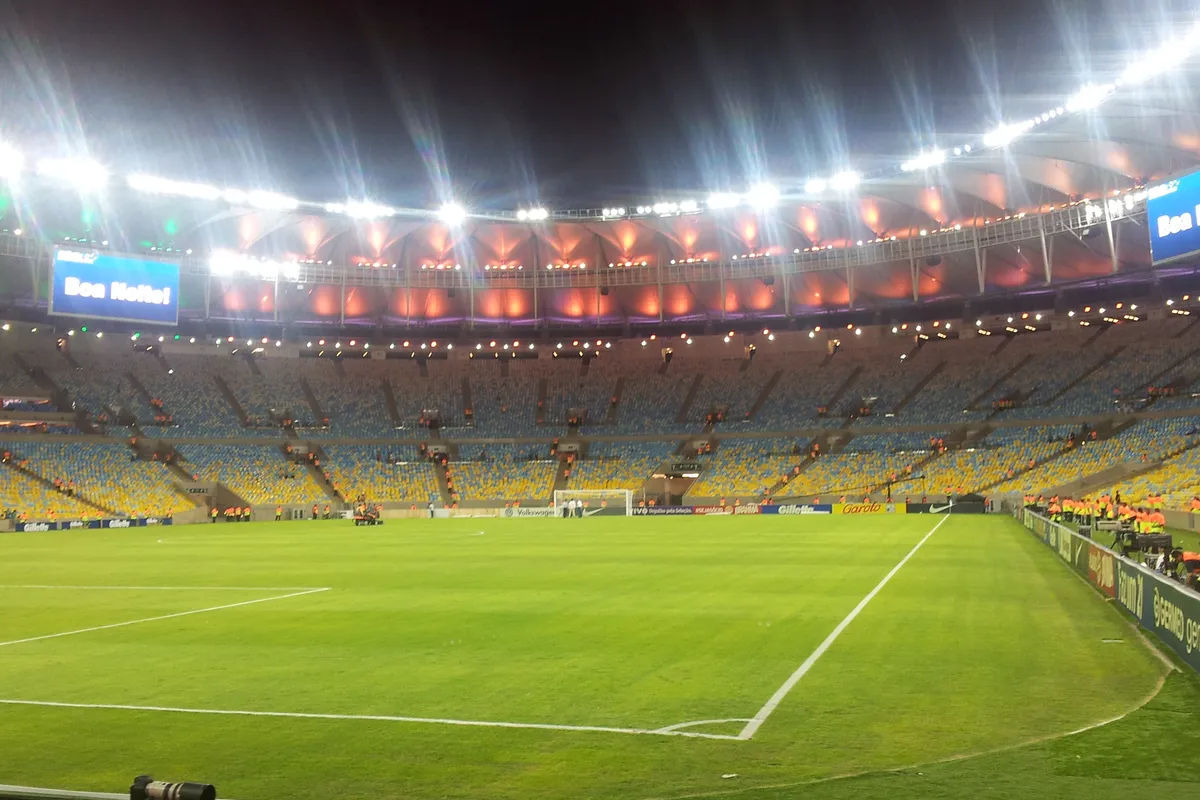
It is a huge bowl in the Maracanã neighborhood, in Rio's north zone, and it has more history than any other stadium on the list. It opened on June 16, 1950, ahead of the men's World Cup that Brazil hosted that year. After a rebuild, it staged the 2014 men's World Cup final, in which Germany beat Argentina 1-0 after extra time. Wikipedia lists a current capacity of 73,139, and the capacity for the 2027 tournament may be set differently.
FIFA notes that the Maracanã will become only the third stadium to host both a men's World Cup final and a Women's World Cup final, after the Råsunda Stadium in Solna, Sweden, now demolished, and the Rose Bowl in Pasadena, California.
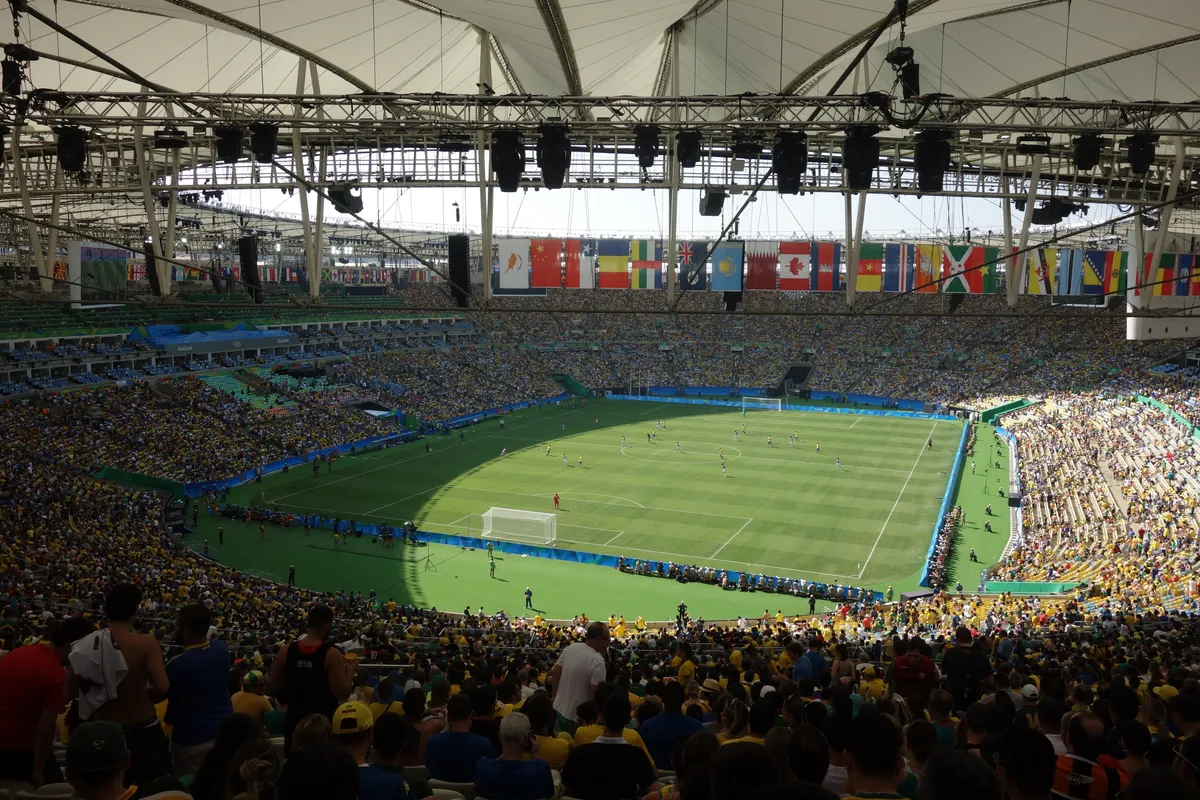
Women's football has already filled it. In the 2007 Pan American Games, Brazil beat the United States 5-0 in the gold-medal match at the Maracanã on July 26, with 67,788 people in the stands, according to Wikipedia. At the 2016 Olympics, the stadium hosted the women's semi-final between Brazil and Sweden on August 16, which Sweden won on penalties, and the gold-medal match on August 19, when Germany beat Sweden 2-1. Wikipedia lists 70,454 for the semi-final and 52,432 for the final. So a big crowd for a women's match in this stadium is not new, and our USWNT road to Brazil shows one of the teams many of our readers will want to follow.
How do you get to the Maracanã?
By metro, in most cases, and the stadium has two stations, one on each side. The first is Maracanã, listed on MetrôRio's own page as Rei Pelé - Maracanã, on Line 2, between Triagem and São Cristóvão. The second is São Cristóvão, also on Line 2. The SuperVia suburban trains also stop at Maracanã station.
For club games in 2026, MetrôRio told fans with tickets for gates A, B and C (west and south sides) to get off at Maracanã, and fans for gates D, E and F (east and north sides) to get off at São Cristóvão. Gates for the World Cup have not been published, so treat this as the pattern, not the rule.
Things to know before you ride:
- The fare is R$ 7.90 per trip on Lines 1, 2 and 4, according to MetrôRio's page. You can tap a Visa, Mastercard or Elo card, or a phone with NFC, at the turnstile, with no paper ticket. On match days MetrôRio recommends contactless payment or loading your card in advance to avoid queues.
- Hours change on match days. In the 2026 notices I read, the metro ran from 5 a.m. to midnight on a Saturday and from 7 a.m. to 11 p.m. on a Sunday. The final is on a Sunday, so ask before you plan a late return. The operator adds staff at Maracanã and São Cristóvão for matches, and for some club games it extended boarding at those two stations after the final whistle.
- The trains are different. After Maracanã matches in 2026, SuperVia ran extra trains from Maracanã station toward Santa Cruz, Japeri and Saracuruna. The station closed for boarding between 11 p.m. and 12:25 a.m., depending on the match, and the other stations were open only for getting off. SuperVia suggests the "Planeje sua Viagem" tool in its app, and its call center is 0800 726 9494. I did not find a fare, so check the app.
- Nothing World Cup specific is published. I could not find a transport plan for the tournament in Rio. The city, FIFA and the host stadiums discussed transport at a workshop in Rio on August 24 to 26, 2026, according to Correio da Manhã, but without details. Plan a ride-hailing app or taxi as a backup.
From the airports, Santos Dumont is next to the financial center, and Galeão is about 12 miles (20 km) out, with a BRT line running from the terminals. Distances, flight times and bus times between the host cities are in our guide to the host cities.
Where should you stay in Rio?
Pick by what you want to do besides the matches and by the metro line. The distances below are straight lines from the Maracanã, our calculation with approximate coordinates, so real routes are longer.
| Area | From the stadium | What it is like |
|---|---|---|
| Tijuca | About 0.9 mi (1.4 km) | The residential neighborhood next to the stadium. Line 1 ends at Uruguai, in Tijuca. |
| Centro and Lapa | About 3.2 mi (5.1 km) | Downtown. Central do Brasil is on the shared stretch of Lines 1 and 2, so there is a direct Line 2 ride to the stadium. |
| Botafogo | About 3.9 mi (6.3 km) | Between downtown and the beaches. It is the end of Line 2, so a direct ride to the stadium. |
| Copacabana | About 4.9 mi (8.0 km) | The beachfront district, on Line 1. Plan one change from Line 1 to Line 2. |
| Ipanema | About 5.2 mi (8.4 km) | The end of Line 1 at General Osório, with Line 4 continuing toward Barra da Tijuca. Plan one change to Line 2. |
Five areas fans usually consider. Distances are straight lines from the Maracanã (our calculation, rounded). Lines are from MetrôRio's page.
MetrôRio says transfers between Lines 1 and 2 are made on the shared stretch between Central do Brasil and Botafogo, so use the operator's trip planner for the exact route. I am not recommending specific hotels: prices and availability for June and July 2027 are not public yet, and the schedule will change demand once the draw is done. If you want an idea of how the matches and the cities fit together, our guide to choosing a base city compares them.
What is there to see in Rio besides the stadium?
The famous one first: the Christ the Redeemer statue on top of Corcovado, a 700-meter (2,300 ft) peak in Tijuca National Park. According to Wikipedia, the statue is 30 meters (98 ft) tall, plus an 8-meter pedestal, and it was dedicated on October 12, 1931. It was named one of the New Seven Wonders of the World on July 7, 2007, and escalators, walkways and elevators to the platform were installed in 2003. The Maracanã is only about 3 miles (4.9 km) from Corcovado in a straight line, our calculation, so both fit in the same trip.
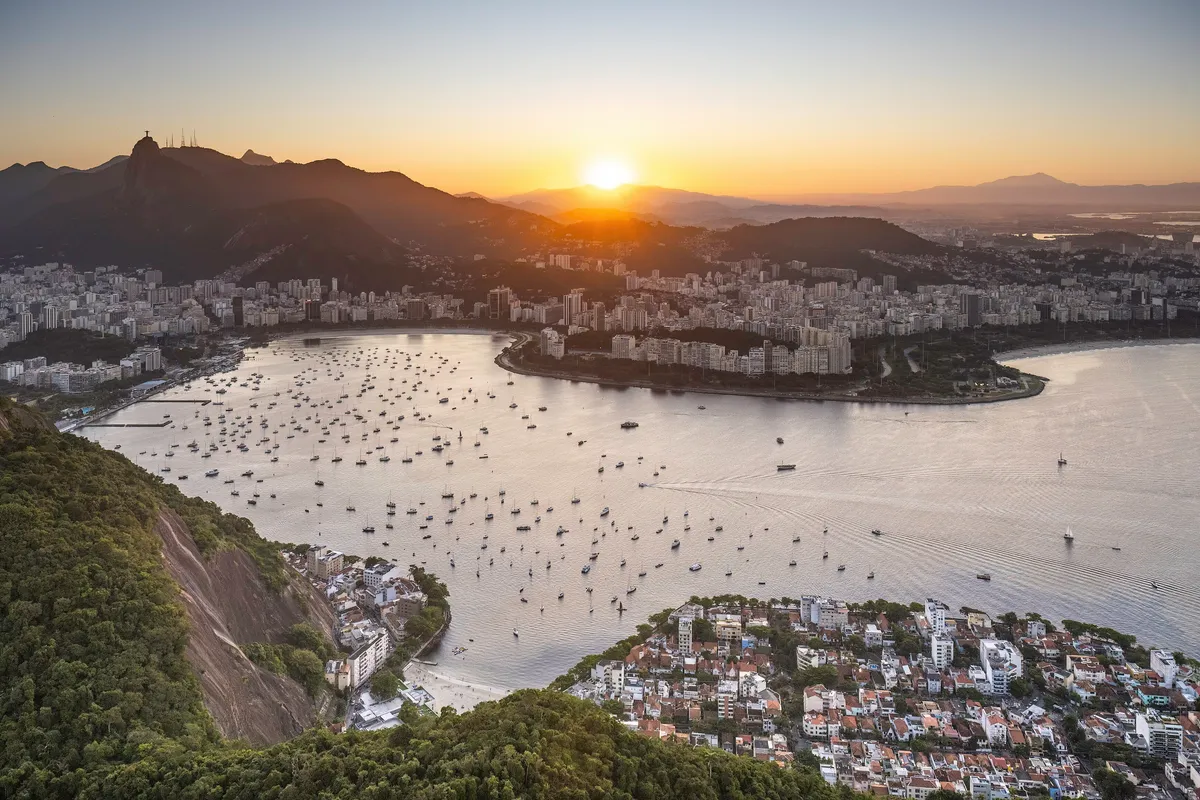
The beaches are the other part of the plan. Our host-cities guide has a photo of Copacabana from above, and the beach is one stop on Line 1.
For fans without a ticket, FIFA's schedule announcement says FIFA Fan Festivals will let fans experience the tournament in Rio and across the country, but I found no site or dates for Rio. The Fan Festival and transport were the main topics of the August 2026 workshop in Rio, according to Correio da Manhã. On June 24, 2026, one year before the opener, the city's sports secretariat held a countdown event at the Fan Fest in Copacabana, according to Diário do Rio. That was a 2026 event, not an announcement for 2027.
What is the weather in Rio in June and July?
Mild and fairly dry. According to INMET's climate normals, the daytime high is about 26 to 27 °C (79-80 °F) and the night low about 19 °C (66-67 °F), with rain on about 5 days a month in the lowlands around the bay. Evenings are cooler, so bring a light jacket for a night match. The hills are wetter than the coast: INMET's mountain station at Alto da Boa Vista, in the Tijuca area, records about 154 mm in June and 180 mm in July, and Corcovado is one of those hills. See the weather table for all eight cities, including how I handled Rio's missing city-center station.
Is Rio safe for World Cup fans?
The U.S. State Department's Level 2 advisory, "Exercise increased caution," covers Brazil as a whole, and our travel guide lists what it says. Two points matter for Rio: the advisory says assaults with sedatives or drugs placed in drinks are common, especially in Rio de Janeiro, so watch your drink, and it advises using ATMs in secure places such as malls and major hotels. After a late match, I would go straight back to the hotel by metro or by ride-hailing app instead of walking around. Read the current advisory before you go, because it can be updated.
Can you combine Rio with São Paulo or Belo Horizonte?
Yes, and the three cities are the tightest cluster of the tournament. In a straight line, Rio is 224 miles (361 km) from São Paulo and 212 miles (342 km) from Belo Horizonte, our calculation in the distance table. A nonstop flight from Rio to São Paulo takes about 1 hour 15 to 20 minutes, and the bus about six hours.
The last week is built for it: the semi-final in São Paulo on July 20, the semi-final in Rio on July 21, the bronze final in São Paulo on July 24 and the final in Rio on July 25. If you are coming from Salvador, the flight to Rio is about two hours, and our Salvador guide covers the seven matches there. If you are coming from the U.S., Brazil needs an e-visa for U.S. citizens, covered in our visa guide, and every match streams on Netflix, as explained in the guide to watching in the U.S..
What is still undecided about Rio?
Four things: the teams that come to the Maracanã (after the December 11, 2026 draw, which is also in Rio, at the Museum of Modern Art), the kick-off times, the transport plan for match days, and the Fan Festival site and program. I will update this guide when each of them is confirmed. More guides are in Brazil Fan Travel and World Cup 2027, and you can read who writes them on the About page. This site is independent and not affiliated with FIFA.
Frequently asked questions
Which matches are played at the Maracanã in the 2027 Women's World Cup?
Nine: the opening match on June 24 with Brazil, five more group games on June 26 and 30 and July 3, 5 and 7, a quarter-final on July 16, a semi-final on July 21 and the final on July 25. Teams and kick-off times will be known after the draw on December 11, 2026.
Does Brazil play at the Maracanã in 2027?
Yes, once in the group stage: Brazil open the tournament there on June 24, 2027. Their next group games are in São Paulo on June 29 and in Brasília on July 4.
How do I get to the Maracanã by metro?
Take Line 2 to Maracanã station (listed as Rei Pelé - Maracanã) or São Cristóvão. For club games in 2026, MetrôRio sent fans with tickets for gates A, B and C to Maracanã and fans for gates D, E and F to São Cristóvão. The fare is R$ 7.90 and you can tap a contactless card or phone at the turnstile.
Where should I stay in Rio for a World Cup match?
Tijuca is the closest, about 0.9 miles (1.4 km) in a straight line. Centro and Botafogo are 3 to 4 miles away with a direct Line 2 ride, and Copacabana and Ipanema, about 5 miles away, need one change between Lines 1 and 2. Prices for June and July 2027 are not public yet.
What is the weather in Rio during the World Cup?
Mild and fairly dry. According to INMET's climate normals, highs are about 26 to 27 °C (79-80 °F) and lows about 19 °C (66-67 °F), with rain on about five days a month near the coast. The hills, including Corcovado, are wetter.
Is there a fan zone in Rio for the 2027 Women's World Cup?
FIFA says there will be FIFA Fan Festivals where fans can experience the tournament in Rio and across the country, but I found no site or dates for Rio. It was one of the topics of the August 2026 workshop with FIFA in Rio.
How big is the Maracanã?
Wikipedia lists a current capacity of 73,139. The capacity for the 2027 tournament may be set differently, and FIFA has not published it yet.
Sources
- FIFA: Women's World Cup Brazil 2027 match schedule, PDF (version of Aug. 17, 2026)
- FIFA: Women's World Cup 2027 champions to lift trophy at Maracanã as match schedule unveiled (Aug. 20, 2026)
- FIFA: Tickets and hospitality, Women's World Cup Brazil 2027
- MetrôRio (official page): fares and ways to pay, read Oct. 29, 2026
- MetrôRio (official page): lines and stations, read Oct. 29, 2026
- Diário do Transporte: MetrôRio terá operação especial neste domingo (5) para jogo no Maracanã (Apr. 4, 2026)
- Diário do Transporte: MetrôRio tem mudanças na operação deste final de semana (08 e 09) durante jogos do Brasileirão (Aug. 7, 2026)
- Diário do Transporte: SuperVia terá mudanças na programação para jogo no Maracanã (Mar. 19, 2026)
- Correio da Manhã: Rio sedia o II workshop de cidades-sede e estádios da Copa Feminina (Aug. 26, 2026)
- Diário do Rio: Rio inicia contagem para a Copa do Mundo Feminina de 2027 com ação em Copacabana (June 25, 2026)
- Wikipedia: Maracanã Stadium (capacity, history, matches hosted, stations)
- Wikipedia: Football at the 2007 Pan American Games, women's tournament (final, attendance)
- Wikipedia: Christ the Redeemer (height, dedication, Corcovado, New Seven Wonders)
- INMET: Normais Climatológicas do Brasil (Rio de Janeiro), read Oct. 24, 2026
- U.S. Department of State: Brazil Travel Advisory, Level 2 (August 2026 update)

Founder and editor, WoSo Arena
I live in Salvador, Brazil, one of the eight host cities of the 2027 Women's World Cup, and I spent five years in the United States, where girls' and women's games filled the parks and school fields of Los Angeles. Every article starts from official sources, listed at the end.