Brazil Fan Travel
Salvador for World Cup Fans: Fonte Nova and the City
Quick answer
Salvador is a strong stop for 2027 Women's World Cup fans who want one city with a stadium, a UNESCO historic center and beaches. The Arena Fonte Nova hosts seven matches, from June 25 to July 12, 2027. Brazil do not play there. The metro's Campo da Pólvora station is the closest to the stadium, and June and July are warm and rainy.
On this page
- Which matches does Salvador host in 2027?
- What is the Arena Fonte Nova like?
- How do you get to the Arena Fonte Nova?
- Where should you stay in Salvador?
- What is there to see in Salvador besides the stadium?
- What should you eat in Salvador?
- What is the weather in Salvador in June and July?
- Is Salvador safe for World Cup fans?
- Can you combine Salvador with Recife and Fortaleza?
- What is still undecided about Salvador?
- FAQ
- Sources
Salvador is where I live, so I will not pretend to be neutral. It is also a city that makes sense for a World Cup trip: the stadium is in the middle of town, the historic center is a short ride away, and the beach and the food are part of the plan, not an extra.
This guide covers the seven matches at the Arena Fonte Nova, how to get to the stadium, where to stay, what to eat and what else happens in the city during the tournament. For the full tournament calendar, see the 2027 Women's World Cup schedule, and for visas, weather and money across all eight cities, our Brazil travel guide.
Which matches does Salvador host in 2027?
Seven: six group games and one Round of 16 game. Salvador is not a quarter-final city, so it is a stop for the first two weeks of the tournament and the start of the knockouts.
| Date | Day | Stage |
|---|---|---|
| June 25 | Friday | Group A |
| June 27 | Sunday | Group F |
| June 29 | Tuesday | Group H |
| July 2 | Friday | Group E |
| July 4 | Sunday | Group A |
| July 7 | Wednesday | Group F |
| July 12 | Monday | Round of 16 (winner of Group G v runner-up of Group H) |
Matches at the Arena Fonte Nova, Salvador. Dates and groups are from FIFA's official schedule (version of Aug. 17, 2026). Teams are not set until the draw on Dec. 11, 2026, and kick-off times have not been published.
Two games belong to Group A, Brazil's group, but Brazil's own matches are in Rio de Janeiro, São Paulo and Brasília, and a Round of 16 game in Fortaleza or Belo Horizonte. Salvador does not appear in Brazil's path. Once the draw is done, you will know which teams come to Bahia, and our list of qualified teams will show who is already in.
July 2 is worth marking. It is Bahia Independence Day, one of the city's major civic celebrations. According to Wikipedia, the Portuguese forces left the city on the night of July 1 to 2, 1823, and the day is a public holiday in Bahia, with parades through the city. The Group E match is that same Friday. I have not seen a traffic plan for that day, so I would check the city's announcements closer to the date.
What is the Arena Fonte Nova like?
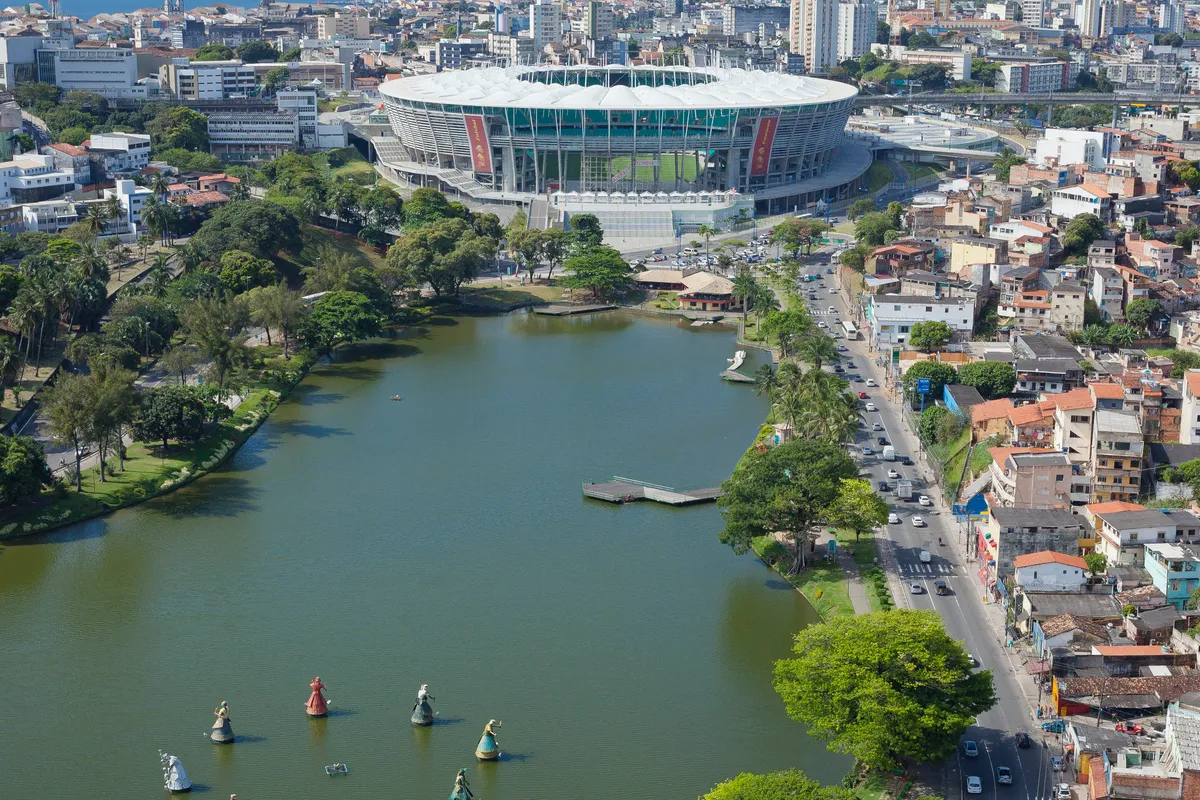
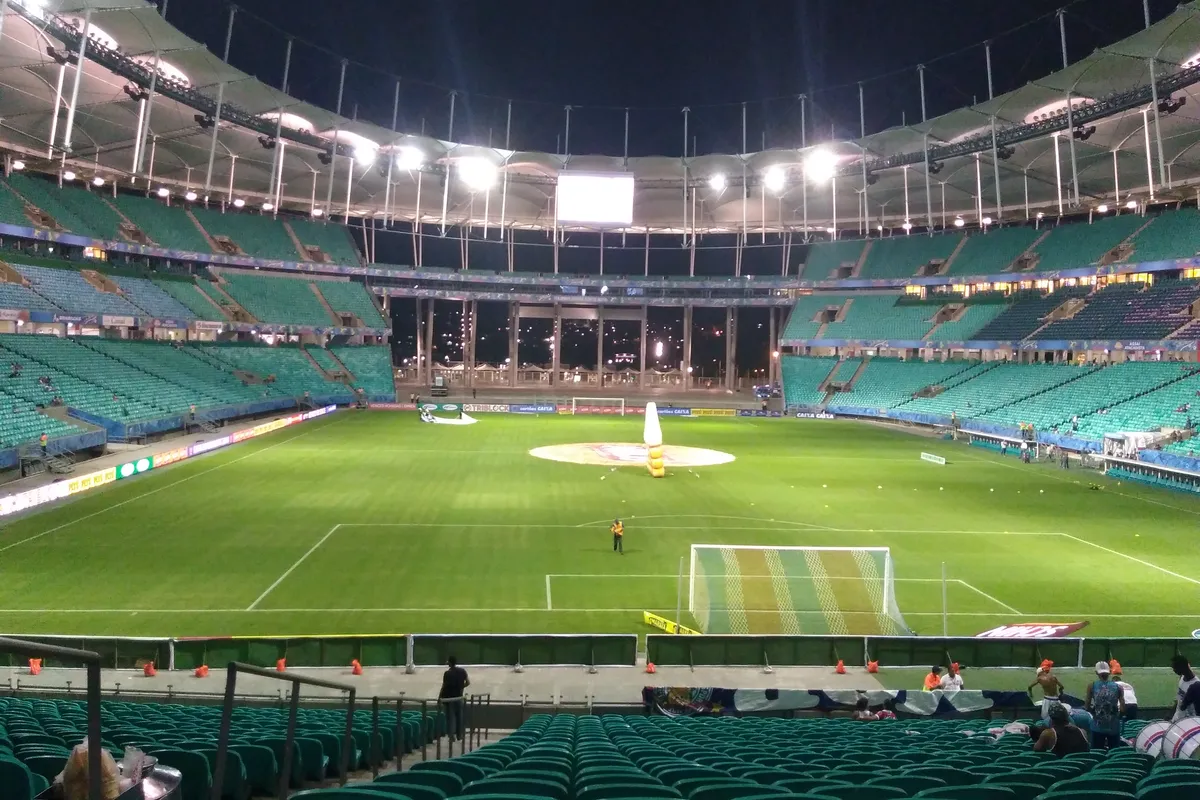
It is a stadium in the Nazaré neighborhood, in central Salvador, with a horseshoe shape that opens toward the Dique do Tororó, a lagoon with large sculptures of Orixás, the deities of Afro-Brazilian religions, standing in the water. Wikipedia lists a capacity of 47,902 seats. The stadium opened in 2013, hosted six matches of the 2014 men's World Cup, and staged women's matches at the 2016 Olympics. The capacity for the 2027 tournament may be set differently.
Locals just say "Fonte Nova," even though the sponsor name has changed several times.
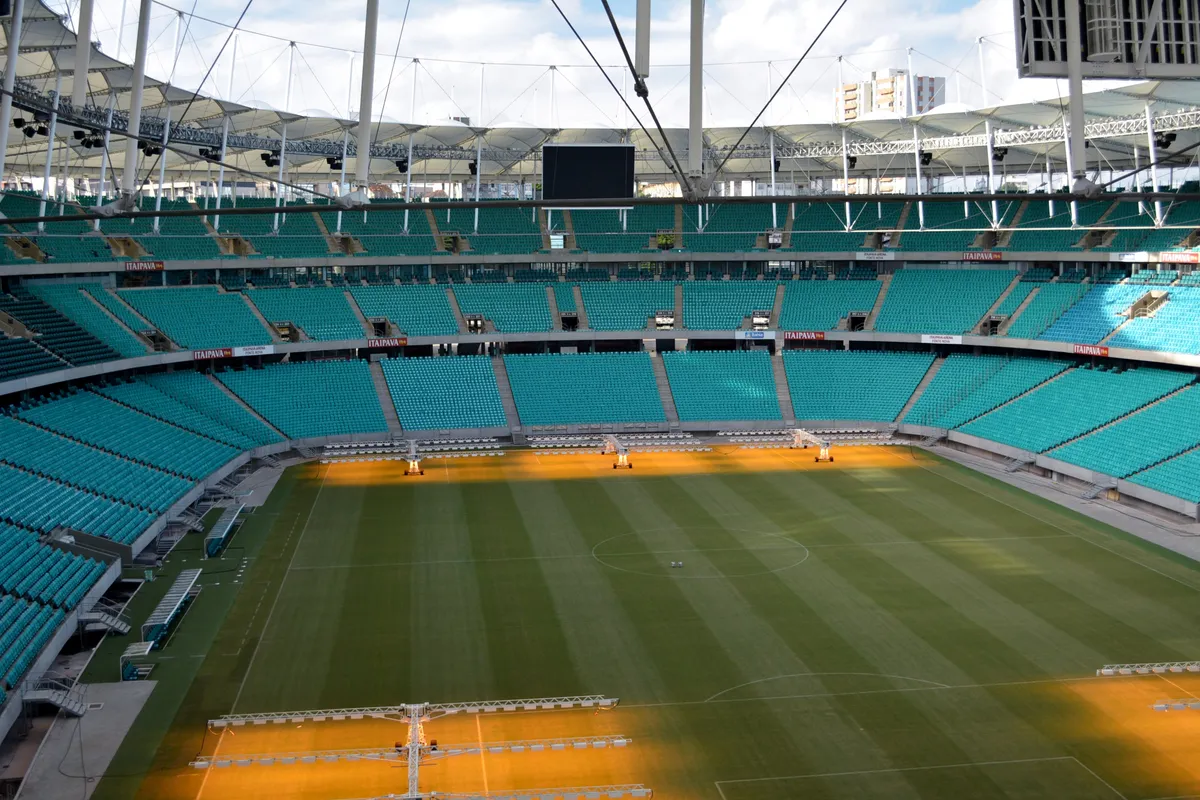
Tickets are not on sale yet. On FIFA's tickets page, the only option today is to register your interest, and our guide to 2027 Women's World Cup tickets explains what is official and what to avoid.
How do you get to the Arena Fonte Nova?
By metro, in most cases. The closest station is Campo da Pólvora, on Line 1 (the red line), and local press calls it the station nearest to the stadium. The operator's official page says the metro runs every day from 5 a.m. to midnight. A metro-only ticket costs R$ 4.10, and a ticket that connects with urban buses and the BRT costs R$ 5.90. According to A Tarde, passengers can pay at the turnstile by tapping a contactless card, a phone or a smartwatch.
From the airport it is two lines. The airport is the last station of Line 2 (the blue line), and Line 2 meets Line 1 at Acesso Norte, so the trip to Campo da Pólvora means one change. Check the metro map before you travel, because station names have changed in the past.
Three things to keep in mind:
- Kick-off times are not out. If a match ends close to midnight, the metro may be closing. For club games, the operator has added staff and extra trains at Campo da Pólvora (A Tarde, Oct. 16, 2026), but nothing has been announced for the World Cup. Plan a ride-hailing app or taxi as a backup.
- A BRT line to the stadium is being planned. The city said in June 2026 that it is preparing a special mobility plan, with a BRT Salvador line to the Arena and traffic measures for match days. These are plans, not confirmed services.
- Women-only metro service and metro links to tourist sites were also mentioned by the state in September 2026 as planned. Treat them as ideas until the dates are announced.
Where should you stay in Salvador?
Pick by what you want to do besides the matches. The distances below are straight lines from the stadium, our calculation with approximate coordinates, so real routes are longer.
| Area | From the stadium | What it is like |
|---|---|---|
| Historic center (Pelourinho) | About 0.6 mi (1 km) | Colonial streets, churches, museums and live music. The closest option to the stadium. |
| Barra | About 2.9 mi (4.7 km) | Beachfront, the Farol da Barra lighthouse, many hotels and restaurants. |
| Rio Vermelho | About 2.3 mi (3.7 km) | Bars, restaurants and street food, with a younger evening crowd. |
Three areas fans usually consider. Distances are straight lines from the Arena Fonte Nova (our calculation, rounded).
The airport is about 13 miles (21 km) from the stadium in a straight line. I am not recommending specific hotels: prices and availability for June and July 2027 are not public yet, and the tournament schedule will change demand once the draw is done.
What is there to see in Salvador besides the stadium?
Start with the Pelourinho, the heart of the historic center. UNESCO inscribed the Historic Centre of Salvador de Bahia in 1985. The city was founded in 1549 and was Brazil's colonial capital until 1763, and the old town has more than 800 buildings with restored facades and interiors, according to Wikipedia. The name comes from the whipping post in the central square, where enslaved people from Africa were punished, a reminder that the beauty of the place sits next to a hard history, and that Afro-Brazilian culture is the center of what Salvador is today.
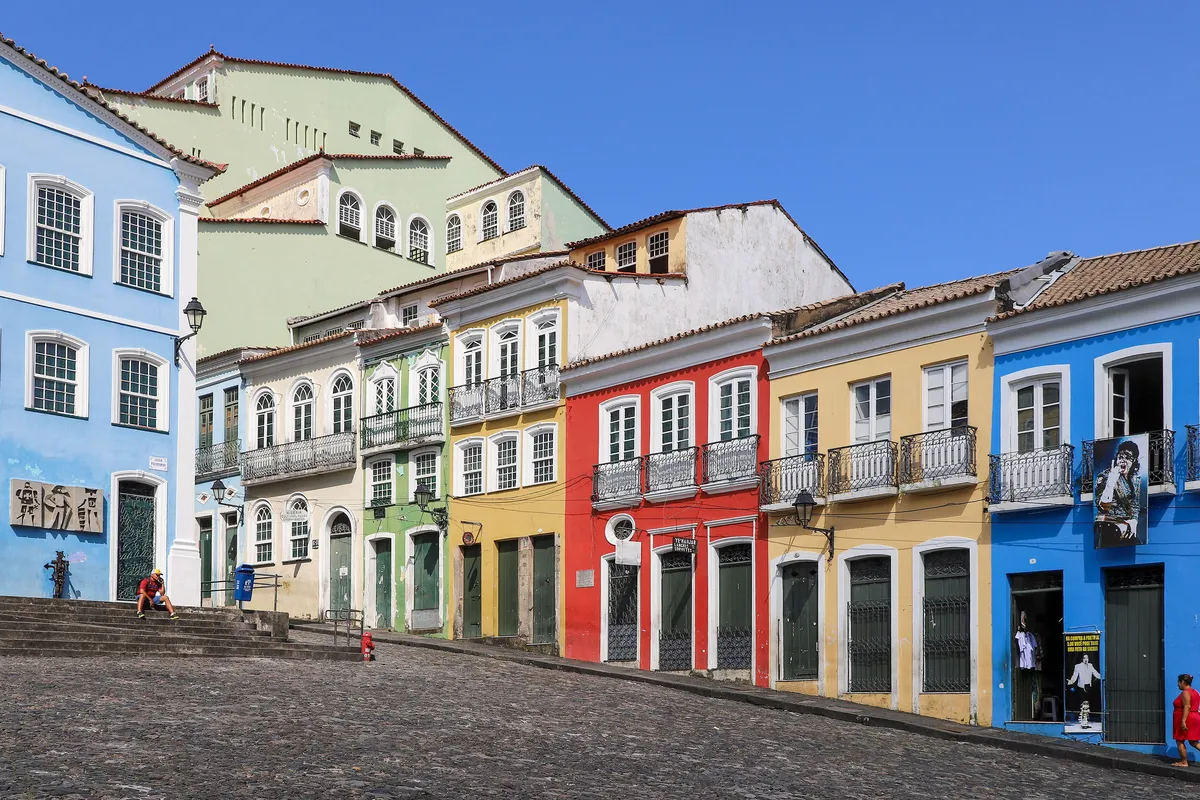
The stadium itself is part of the walk. The Dique do Tororó, right next to it, is a lagoon with a path around it and the Orixá sculptures in the water. The 2027 matches are scheduled for local times that FIFA has not published yet, so some may be played at night, under the floodlights of the roof ring.
For fans without a ticket, the city announced a Fan Festival at Praça Maria Felipa, in the Comércio neighborhood, with matches on big screens and cultural activities, and a cultural route that would link it to the Arena. In June 2026, the city described those as plans in preparation, so dates and the program are still to come.
What should you eat in Salvador?
Two dishes first. Acarajé is a ball of mashed beans fried in dendê (palm) oil and split open to be filled, usually with vatapá, shrimp and salad. It is sold by the baianas, women in white dresses, from a tray on the street. Brazil's heritage agency, IPHAN, has listed the trade of the baianas de acarajé as national intangible heritage since 2005. Moqueca baiana is a stew of fish or shrimp with coconut milk, peppers and dendê oil, served with rice and farofa.
The state government of Bahia says it got the authorization for baianas to sell acarajé inside the Arena Fonte Nova during the tournament (A Tarde, Aug. 25, 2026). The article does not say how many stalls there will be, or the prices, and I did not find it in FIFA's own announcements, so treat it as announced by Bahia and not yet confirmed by FIFA. Outside the stadium, you will find acarajé in the historic center and in Rio Vermelho. If you do not like spicy food, ask for it "sem pimenta."
What is the weather in Salvador in June and July?
Warm and rainy. According to INMET's climate normals, the daytime high in June and July is about 27 °C (80-81 °F) and the night low about 21-22 °C (70-71 °F). It rains on about 18 to 19 days a month, with 238 mm in June and 194 mm in July on average, one of the wettest of the eight host cities. That is a monthly average, so many of those days are showers, not all-day rain. Pack a light rain jacket and shoes that dry quickly, and see the weather table for all eight cities.
Is Salvador safe for World Cup fans?
The U.S. State Department's Level 2 advisory, "Exercise increased caution," covers Brazil as a whole, and our travel guide lists what it says: use ATMs in secure places such as malls and major hotels, watch your drinks, and carry only the cards you need. Those habits apply in Salvador too. After a late match, I would go straight back to the hotel by metro or by ride-hailing app instead of walking around.
For women's matches specifically, Bahia's Secretary of Policies for Women said in September 2026 that the state is working with the stadium on a "Sala Lilás," a space for welcoming women, and on family restrooms, plus a "Mulheres Seguras" seal for hotels and tourism services. All of it was described as planned, so I will update this guide when the details are confirmed.
Can you combine Salvador with Recife and Fortaleza?
Yes, and it works well for the group stage. In a straight line, Salvador is 420 miles (676 km) from Recife and 639 miles (1,028 km) from Fortaleza, our calculation in the base-city section of the travel guide. Recife and Salvador are also the two wettest cities in June and July, so keep the rain jacket in the bag for the whole Northeast trip.
If you are coming from the U.S., remember that Brazil needs an e-visa for U.S. citizens, covered in our visa guide, and that every match streams on Netflix, as explained in the guide to watching in the U.S..
What is still undecided about Salvador?
Four things: the teams that come to Bahia (after the December 11, 2026 draw), the kick-off times (published after the draw), the transport plans for match days, and the Fan Festival program. I will update this guide when each of them is confirmed. More guides are in Brazil Fan Travel and World Cup 2027, and you can read who writes them on the About page. This site is independent and not affiliated with FIFA.
Frequently asked questions
Which matches are played in Salvador at the 2027 Women's World Cup?
Seven matches at the Arena Fonte Nova: group games on June 25, 27 and 29 and July 2, 4 and 7, and a Round of 16 game on July 12. Teams and kick-off times will be known after the final draw on December 11, 2026.
Does Brazil play in Salvador in the 2027 Women's World Cup?
No. Brazil's group games are in Rio de Janeiro, São Paulo and Brasília. Two Salvador matches are from Group A, Brazil's group, but with other teams.
How do I get to the Arena Fonte Nova by metro?
Take Line 1 (the red line) to Campo da Pólvora, the station closest to the stadium. The metro runs every day from 5 a.m. to midnight, and a metro-only ticket costs R$ 4.10, according to the operator. From the airport, take Line 2 and change to Line 1 at Acesso Norte.
Where should I stay in Salvador for a World Cup match?
The historic center (Pelourinho) is the closest to the stadium, about 0.6 miles (1 km) in a straight line. Barra and Rio Vermelho are the beach and nightlife options, about 2 to 3 miles (4 to 5 km) away. Prices for June and July 2027 are not public yet.
What is the weather in Salvador during the World Cup?
Warm and rainy. According to INMET's climate normals, highs are about 27 °C (80-81 °F) in June and July, with rain on 18 to 19 days a month. Bring a light rain jacket.
Will acarajé be sold inside the Arena Fonte Nova?
Bahia's state government says it secured authorization for baianas to sell acarajé inside the stadium during the tournament. The details, such as stalls and prices, have not been published, and FIFA has not confirmed it in the announcements I read.
Is there a fan zone in Salvador for the 2027 Women's World Cup?
The city announced a Fan Festival at Praça Maria Felipa, in the Comércio neighborhood, with matches on big screens and cultural activities. In June 2026 the program was still in preparation.
Sources
- FIFA: Women's World Cup Brazil 2027 match schedule, PDF (version of Aug. 17, 2026)
- FIFA: Tickets and hospitality, Women's World Cup Brazil 2027
- CCR Metrô Bahia (official page): lines, hours and fares, read Oct. 26, 2026
- A Tarde: Metrô monta operação especial para Bahia x Flamengo na Fonte Nova (Oct. 16, 2026)
- A Tarde: Fan Festival, Salvador detalha preparativos para a Copa do Mundo Feminina de 2027 (June 24, 2026)
- A Tarde: Copa Feminina 2027 terá acarajé dentro da Arena Fonte Nova (Aug. 25, 2026)
- Bahia Notícias: Bahia prepara Sala Lilás e ações de segurança para a Copa de 2027 (Sept. 1, 2026)
- IPHAN Bahia: Patrimônio Imaterial (Ofício das Baianas de Acarajé, Livro dos Saberes since 2005)
- Wikipedia: Arena Fonte Nova (capacity, history, matches hosted)
- Wikipedia: Salvador Metro (lines and stations)
- Wikipedia: Historic Center of Salvador (UNESCO 1985, Pelourinho)
- Wikipedia: Independence of Bahia (July 2, 1823)
- INMET: Normais Climatológicas do Brasil 1991-2020 (Salvador), read Oct. 24, 2026
- U.S. Department of State: Brazil Travel Advisory, Level 2 (August 2026 update)
Founder and editor, WoSo Arena
I live in Salvador, Brazil, one of the eight host cities of the 2027 Women's World Cup, and I spent five years in the United States, where girls' and women's games filled the parks and school fields of Los Angeles. Every article starts from official sources, listed at the end.