Brazil Fan Travel
São Paulo for World Cup Fans: Arena Itaquera Guide
Quick answer
São Paulo hosts ten matches of the 2027 Women's World Cup, more than any other city, all at the Arena Itaquera in the east zone. They include Brazil's second game on June 29, a semi-final on July 20 and the bronze final on July 24. The simple way in is Metro Line 3-Red or the Line 11 train to Corinthians-Itaquera station. Who plays and when will be known only after the December 11 draw.
On this page
- Which matches does São Paulo host in 2027?
- What is the Arena Itaquera like?
- What is the best way to reach the Arena Itaquera?
- Where should you stay in São Paulo?
- What is there to do in São Paulo besides the match?
- What is the weather in São Paulo in June and July?
- Is São Paulo safe for World Cup fans?
- Can you combine São Paulo with Rio de Janeiro?
- What is still undecided about São Paulo?
- FAQ
- Sources
São Paulo has more matches than any other host city at the 2027 Women's World Cup, and all of them are in the east of the city, at the stadium most people know as the home of Corinthians. I built this guide from FIFA's schedule, the city hall and the official transport pages, and I add what I saw in September 2026, when I went to Corinthians v Bahia there, a semi-final of the Brazilian women's league that Corinthians won 1-0. Where a detail was out of my reach, I tell you.
Here are the ten matches, the way to the stadium, where to sleep, what to do on a free day and the June and July weather. The full tournament calendar is in my schedule guide, and visas, money and the other seven cities are in the Brazil travel guide.
Which matches does São Paulo host in 2027?
Ten, the most of the eight host cities: six group games, one round-of-16 match, one quarter-final, one semi-final and the bronze final. São Paulo does not stage the final, which is in Rio, but it has the match played the day before it.
| Date | Day | Stage |
|---|---|---|
| June 25 | Friday | Group B |
| June 27 | Sunday | Group F |
| June 29 | Tuesday | Group A, Brazil's second match |
| July 1 | Thursday | Group D |
| July 4 | Sunday | Group H |
| July 8 | Thursday | Group G |
| July 11 | Sunday | Round of 16 |
| July 17 | Saturday | Quarter-final |
| July 20 | Tuesday | Semi-final |
| July 24 | Saturday | Bronze final |
Matches at the Arena Itaquera, São Paulo. Dates are from the São Paulo city hall's list of the ten matches (Aug. 20, 2026), and stages follow FIFA's schedule grid (PDF of Aug. 17, 2026). The group letters are my reading of that grid. Who plays whom comes out of the Dec. 11, 2026 draw, and FIFA has not released kick-off times.
Brazil open the tournament in Rio on June 24, play here on June 29 and finish the group stage in Brasília on July 4, according to the city hall. To follow the hosts, start with my Brazil team guide. Opponents will appear in the list of qualified teams as the places are filled, and the 2027 favorites guide ranks the contenders.
Only FIFA sells official tickets, and my tickets guide sorts the real channel from the resale traps.
What is the Arena Itaquera like?
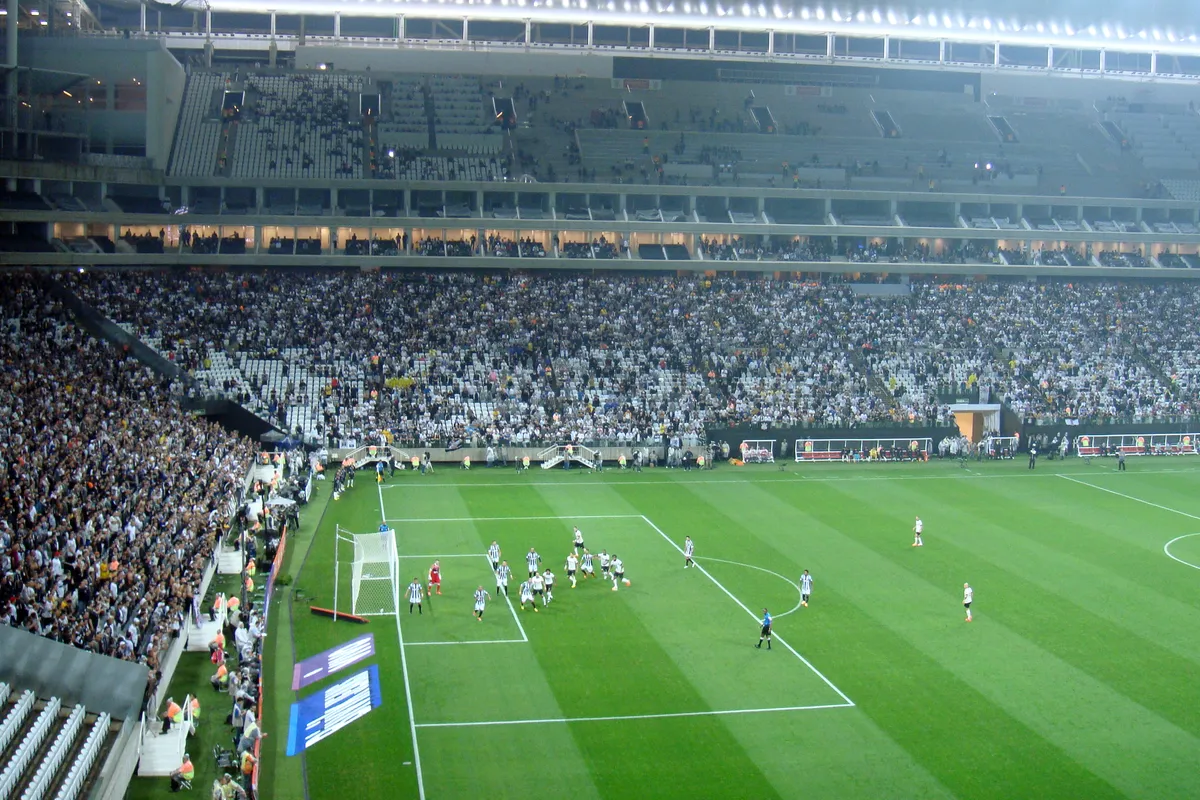
FIFA's name for the tournament is Arena Itaquera. Everybody else says Arena Corinthians, or Neo Química Arena for the sponsor, and it is the same stadium, in the Itaquera district of the east zone. Wikipedia lists a seating capacity of 48,905, though FIFA may set another figure for 2027.
It is no newcomer to big events. The stadium opened in May 2014, and a month later it staged the 2014 men's World Cup opener, Brazil against Croatia on June 12, plus three more group games, a round-of-16 match and a semi-final, according to Wikipedia. It also hosted matches of the women's tournament at the 2016 Olympics and the first NFL game ever played in South America.
A women's crowd has filled it recently, too. On June 6, 2026, Brazil beat the United States 2-1 there in a friendly, coming from behind after the U.S. scored first, with more than 31,000 fans in the stands, according to Agência Brasil's match report. If you follow the American side, my USWNT road to Brazil shows where they stand.
What is the best way to reach the Arena Itaquera?
By metro, and this is the easy case. Line 3-Red ends at Corinthians-Itaquera station, about 500 meters (550 yd) from the stadium, according to Wikipedia, and the same station is on CPTM's Line 11-Coral. One stop before the end, Artur Alvim is about 800 meters (2,600 ft) away. The stadium address is Avenida Miguel Ignácio Curi, 111.
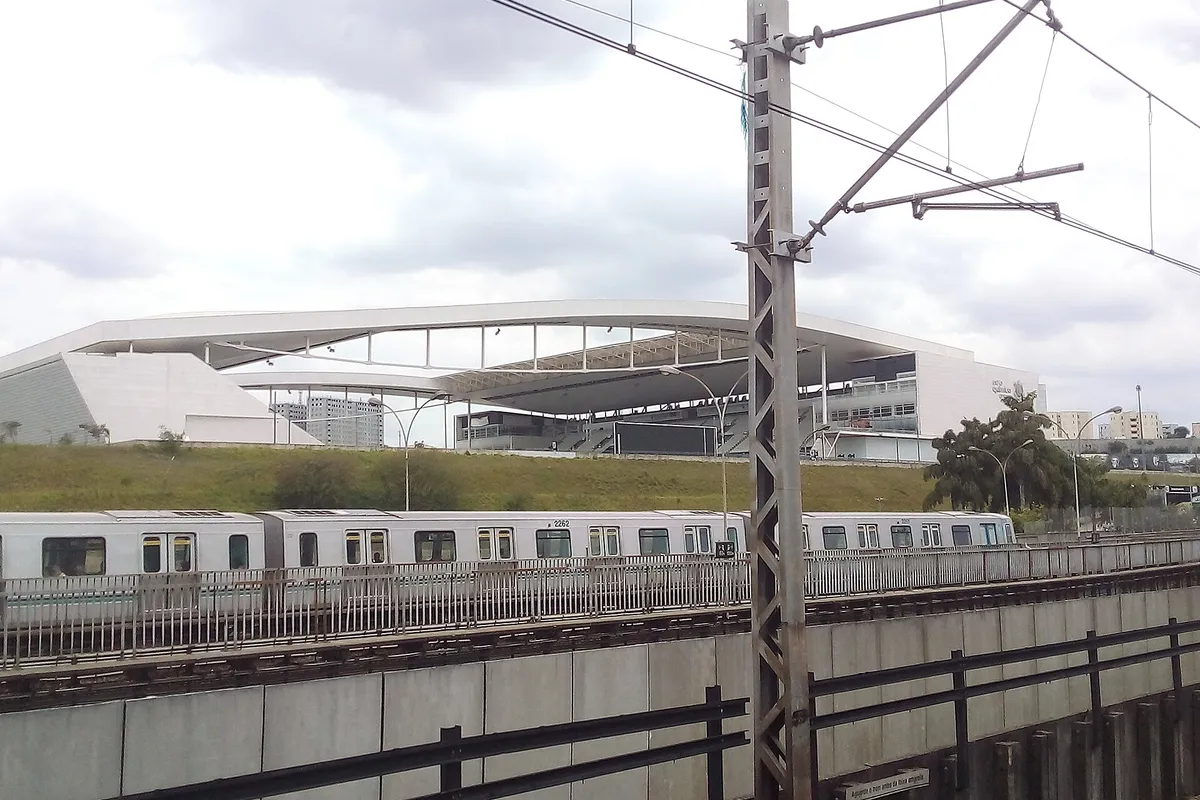
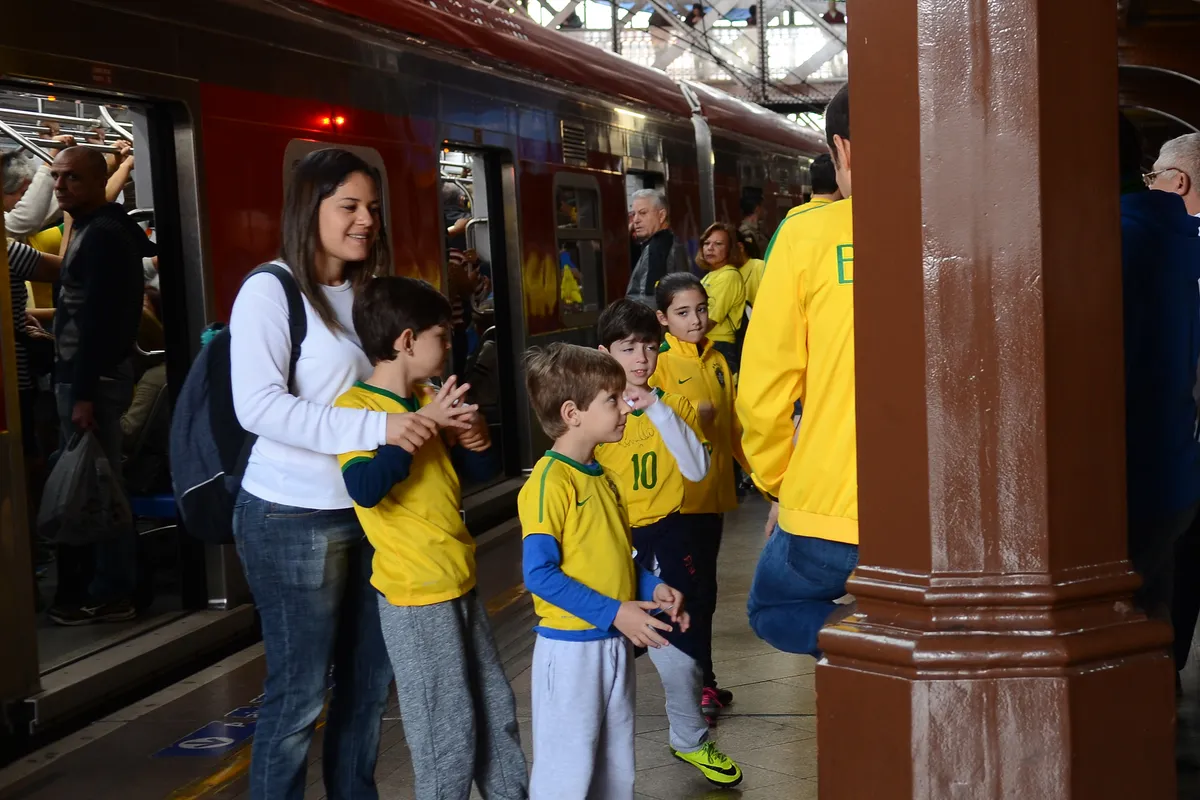
This is how I did it for that semi-final. I stayed in Tatuapé and took the Line 11 train, which needs about 10 minutes and a single stop, while the metro makes six stops over the same stretch. The system is integrated and the fare is the same, so on match days the trains run fuller. From the station it was another 10 minutes on foot to the gates, a stretch of about 900 meters (0.56 mi), which is longer than the 500 meters Wikipedia gives for the station itself. A crowd walks it, as on any match day there, and I found it safe and well policed.
By Uber from my hotel it was about 30 minutes, and longer the closer you leave to kick-off. I would set out one hour before the match to get ahead of the traffic. A World Cup crowd will be bigger than a league semi-final one, so give yourself more time.
Details that change your plan:
- The fare is R$ 5.40 on the metro and the trains since January 6, 2026, up from R$ 5.20, according to Diário do Transporte. A new adjustment is possible before June 2027, so check the price again closer to the trip.
- The metro closes around midnight. Metrô's page says it runs daily from 4:40 a.m. to midnight, and Corinthians-Itaquera station is listed from 4:40 a.m. to 12:19 a.m. The same page says the Saturday-to-Sunday overnights run 24 hours as an experiment until January 2027, so I would not count on that for the World Cup.
- Late nights have a precedent. For the NFL game in September 2025, Metrô and CPTM ran all night, with Corinthians-Itaquera and Artur Alvim open for boarding and the other stations open only for getting off. That was one event, not a promise for the World Cup.
- Pick the station for your sector. For the same game, Metrô opened the station's south walkway, which leads straight to the stadium, from 2 p.m., and said the two stations serve different sectors of the stadium. FIFA has not assigned World Cup gates yet, so read the notices in the station.
- Buy your fare early. Motiva's tips for a match weekend in August 2026 were to buy the QR code in the official app or load your card ahead of time, to avoid the ticket-office line on the way home, and to let passengers get off before you board.
- There was an express train in the past. Wikipedia describes an "Expresso Corinthians" service between Luz and Corinthians-Itaquera in about 17 minutes. I could not confirm that it will run in 2027.
- Nothing World Cup specific yet. The city hall says it is working on mobility, security and tourism, but I found no match-day transport plan for the tournament.
I would leave the car at the hotel. For a women's friendly in June 2026, the traffic agency CET closed streets around the arena from 2:30 p.m. and recommended public transport, naming the Corinthians-Itaquera station. Wikipedia lists the stadium about 13 miles (21 km) from Guarulhos airport, and my guide to airports and flights between the host cities compares Guarulhos with Congonhas.
Where should you stay in São Paulo?
The area around the arena is mostly residential, with street shops, and I found no big-chain hotels close by. For the September semi-final I stayed at the Blue Tree in Tatuapé, the nearest area with international-standard hotels, breakfast and some infrastructure. Chains such as Intercity and Blue Tree have hotels there. Choose by the train or metro line, since the ride home after the match is the part that matters. The table lists four options, from the closest to the most central.
| Area | From the stadium | What the ride is like |
|---|---|---|
| Itaquera and Artur Alvim | 0.3 to 0.5 mi (0.5 to 0.8 km) | The two closest stations, on Line 3. The shortest trip home, but a residential area with street shops and no big-chain hotels close by, in what I saw. |
| Tatuapé | About 6.5 mi (10.5 km) | On Line 3 and on Line 11, so one ride to the stadium without a change. My train took about 10 minutes, and the metro makes six stops. The area with hotels of international standard. |
| Centro (Sé and República) | About 10.1 mi (16.2 km) to Sé | Both are on Line 3. Metrô's list puts Sé 12 stops from Corinthians-Itaquera, my count, and Sé is also on Line 1-Blue. |
| Avenida Paulista and Jardins | About 11.6 mi (18.6 km) | Line 2-Green runs along the avenue. Plan at least one change to reach Line 3: Line 2 meets Line 1 at Paraíso and Line 1 meets Line 3 at Sé. |
Four areas fans can consider. The first row is the station distance from Wikipedia. The other distances are straight lines from the stadium (my calculation with approximate coordinates, rounded), so the real routes are longer. Lines are from Metrô's station list.
One detail matters if you stay on Paulista and come back late. Metrô says that to transfer at Sé, Paraíso or Ana Rosa you must board a Line 1, 2 or 3 train before midnight, so a late match and a change of line do not mix. I quote no hotel prices, because rates for June and July 2027 are not online yet and the draw will move demand. To pick a base for the whole trip, the base-city section of my travel guide compares the eight.
What is there to do in São Paulo besides the match?
Two things fit a football trip. The first is the Museu do Futebol, inside the Pacaembu stadium. According to the museum's own page, it opens Tuesday to Sunday from 9 a.m. to 6 p.m., with the last entry at 5 p.m., and closes on Mondays. Entry is R$ 25 and half price is R$ 12.50, with free admission for everyone on Tuesdays and for children up to seven, and you buy at the box office. On the first Tuesday of the month it stays open until 9 p.m. Prices are the ones on the page today and may change by 2027.
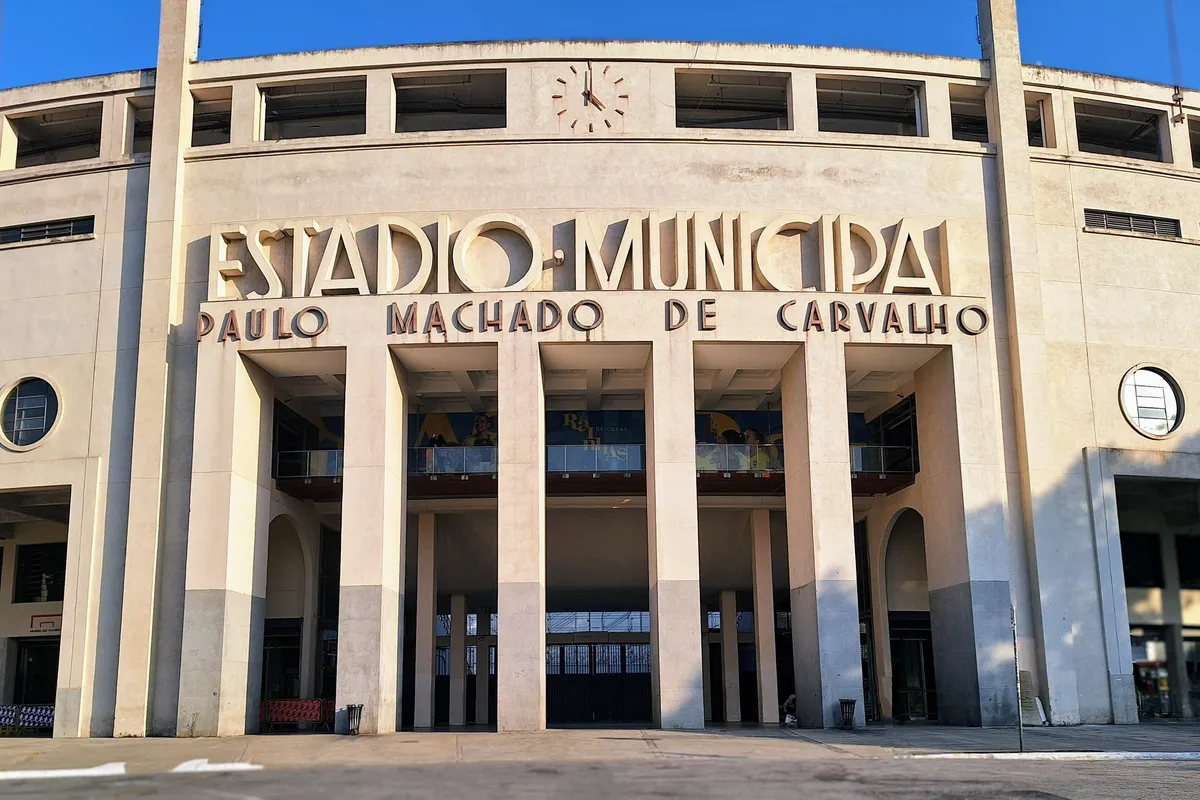
None of the ten match days falls on a Monday, so the closing day never collides with a game. Two of them, June 29 and July 20, are Tuesdays, the free day, if the policy holds. The museum's closest metro stops are Paulista, on Line 4-Yellow, 900 meters away, and Clínicas, on Line 2-Green, 1,000 meters away, both in the opposite part of the city from Itaquera.
The second is Avenida Paulista, a 1.7-mile (2.8 km) avenue with Line 2 running underneath, according to Wikipedia. It is home to the São Paulo Museum of Art (MASP), and under the museum an antiques fair runs every Sunday. Three of the matches are on Sundays (June 27, July 4 and July 11), so you can fit it in before an evening game.
What is the weather in São Paulo in June and July?
Cool and fairly dry, and cooler than Rio or Salvador. According to INMET's climate normals for 1991-2020, the daytime high is about 23 °C (73 °F) and the night low 13 to 14 °C (55-56 °F), with 60 mm of rain in June and 48 mm in July, over about five and four days. The numbers come from the city's weather station, so the east side can differ a little. If your match is at night, bring a jacket. The travel guide's climate table sets São Paulo beside the other cities.
Is São Paulo safe for World Cup fans?
I found no safety plan published for the matches, so I will not invent one. My guide to safety for World Cup travelers lists what the official advisories say, with sections on getting around and crowds. On the September match day I went, the walk from the station to the gates was crowded, well policed and felt safe to me. One fact from the transport side: for the 2025 NFL game, Metrô added operating and security staff at the two stations nearest the stadium, which are the ones to use on a match day.
Can you combine São Paulo with Rio de Janeiro?
Yes, and it is the pair most fans will build a trip around. On the map they are 224 miles (361 km) apart, per the distance table I made. Flying nonstop takes roughly 1 hour 15 to 20 minutes, and the bus around six hours.
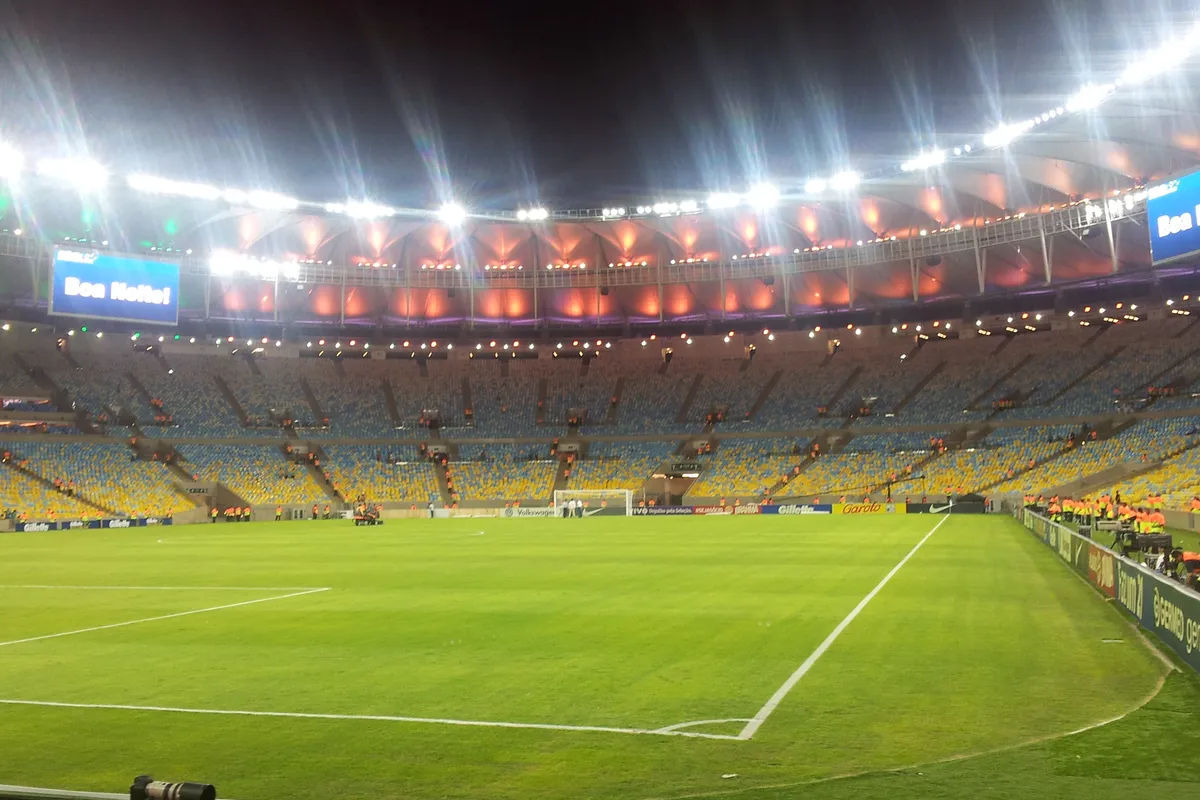
The schedule helps. Rio has the opener on June 24 and São Paulo its first match the next day, and Brazil's own path goes from the Maracanã on June 24 to São Paulo on June 29. The last week alternates between the two: a semi-final here on July 20, the other one in Rio on July 21, the bronze final back here on July 24 and the final in Rio on July 25. The Maracanã guide covers the Rio end, and the seven matches in Salvador are in the Fonte Nova guide. Travelers from the U.S. need an e-visa (my visa guide) and can stream every match on Netflix (see how to watch from the U.S.).
What is still undecided about São Paulo?
Four things: the teams (after the December 11, 2026 draw), the kick-off times, the sectors and the match-day transport plan, and the Fan Festival, which the city hall's August 20 announcement does not mention. I will come back to this page when any of them is settled. Other guides are filed under Brazil Fan Travel and World Cup 2027. I run this site on my own, and it has no affiliation with FIFA.
Frequently asked questions
How many matches does São Paulo host in the 2027 Women's World Cup?
Ten, the most of any host city: six group games, a round-of-16 match, a quarter-final, a semi-final and the bronze final. All are at the Arena Itaquera. Opponents and kick-off times come after the December 11, 2026 draw.
Does Brazil play in São Paulo?
Yes, once: Brazil's second group game is on June 29, 2027. Their first is in Rio on June 24 and their third in Brasília on July 4, according to the São Paulo city hall.
When are the semi-final and the bronze final in São Paulo?
The semi-final is on Tuesday, July 20, and the bronze final on Saturday, July 24. The other semi-final is in Rio on July 21, and the final is in Rio on July 25.
What is the best way to reach the Arena Itaquera by metro?
Take Line 3-Red to Corinthians-Itaquera, the last station, about 500 meters (550 yd) from the stadium. The station is also on CPTM's Line 11-Coral. Artur Alvim, one stop before, is about 800 meters away. The fare is R$ 5.40 as of 2026, and the metro runs from 4:40 a.m. to midnight.
Where should you stay for a match at the Arena Itaquera?
The area around the stadium is mostly residential, with street shops and no big-chain hotels close by. Tatuapé is the nearest area with international-standard hotels and breakfast, and it is one train ride from the stadium on Line 11 or Line 3.
How long does it take to get from Tatuapé to the stadium?
By train on Line 11 it took me about 10 minutes with a single stop, then about 10 minutes on foot to the gates. By Uber it was about 30 minutes, and longer close to kick-off, so leave one hour before the match.
Is the Arena Itaquera the same as the Neo Química Arena and Arena Corinthians?
Yes. FIFA calls it Arena Itaquera for the tournament, Neo Química Arena is the sponsor name and Arena Corinthians is the common name. It is in the Itaquera district, in the east zone of São Paulo.
How many people does the Arena Itaquera hold?
Wikipedia lists a seating capacity of 48,905. FIFA has not published a capacity for the tournament, and it may differ.
What is the weather in São Paulo during the World Cup?
Cool and fairly dry. INMET's climate normals give a daytime high near 23 °C (73 °F), a night low of 13 to 14 °C (55-56 °F) and 60 mm of rain in June against 48 mm in July. Pack a jacket for a night match.
Is the Museu do Futebol open on match days?
It is open Tuesday to Sunday, 9 a.m. to 6 p.m., and closed on Mondays, according to its page. None of the ten match days is a Monday, and June 29 and July 20 are Tuesdays, when admission is free if the policy stays.
Sources
- Prefeitura de São Paulo: Cidade com mais jogos, São Paulo receberá 10 partidas da Copa do Mundo Feminina 2027 (Aug. 20, 2026)
- FIFA: Women's World Cup Brazil 2027 match schedule, PDF (version of Aug. 17, 2026)
- Prefeitura de São Paulo (CET): CET realiza interdições em Itaquera para o jogo Brasil x EUA Feminino (June 5, 2026)
- Metrô de São Paulo (official page): operating hours, read Nov. 1, 2026
- Metrô de São Paulo (official page): lines and stations, read Nov. 1, 2026
- Diário do Transporte: Aumentos de tarifas de transportes em São Paulo já estão em vigor (Jan. 6, 2026)
- Diário do Transporte: Metrô e CPTM funcionam ininterruptamente para atender torcedores em dia de jogo da NFL na Neo Química Arena (Sept. 3, 2025)
- Diário do Transporte: Operações da Motiva facilitam deslocamento dos torcedores (Aug. 29, 2026)
- O Povo (Agência Brasil/EBC): Em virada relâmpago, seleção brasileira feminina vence Estados Unidos (June 6, 2026)
- Museu do Futebol (official page): hours and tickets, read Nov. 1, 2026
- Museu do Futebol (official page): how to get there, read Nov. 1, 2026
- Wikipedia: Neo Química Arena (capacity, history, events, transport)
- Wikipedia: Paulista Avenue (length, Line 2, MASP, Sunday antiques fair)
- INMET: Normais Climatológicas do Brasil (São Paulo, Mirante de Santana), read Oct. 24, 2026

Founder and editor, WoSo Arena
I live in Salvador, Brazil, one of the eight host cities of the 2027 Women's World Cup, and I spent five years in the United States, where girls' and women's games filled the parks and school fields of Los Angeles. Every article starts from official sources, listed at the end.