Brazil Fan Travel
Traveling to Brazil for the 2027 Women's World Cup
Quick answer
To travel to Brazil for the 2027 Women's World Cup, U.S. citizens need an e-visa applied for on Brazil's official portal, plus a passport valid through the whole trip. The tournament runs June 24 to July 25, 2027, in eight cities, and it falls in Brazilian winter: dry in Brasília, warm and rainy in Salvador and Recife, cool in Porto Alegre. Tickets are not on sale yet.
On this page
- Do U.S. citizens need a visa to travel to Brazil?
- When should you book flights and hotels?
- Which host city should you use as a base?
- Is Salvador a good base for the Northeast?
- What is the weather like in Brazil in June and July?
- Is it safe to travel to Brazil for the World Cup?
- Do you need vaccines to travel to Brazil?
- What about money and language?
- What will be updated after the draw?
- FAQ
- Sources
Brazil is a big country, and a World Cup with eight host cities is really eight different trips. Some cities are about 340 kilometers (210 miles) apart, others more than 2,000 kilometers (1,200 miles), and the weather changes a lot from one to the next.
This guide covers what you can plan today: the visa, how to choose a base, the weather in June and July, and what the official U.S. sources say about safety and health. I live in Salvador, one of the host cities, so I will point out where the Northeast looks different. For the dates, stadiums and bracket, see the 2027 Women's World Cup schedule.
Do U.S. citizens need a visa to travel to Brazil?
Yes, and it is an electronic visa. According to the Brazilian consulate in Miami, citizens of the United States, Canada and Australia have needed a visa to enter Brazil for tourism since April 10, 2025. The e-visa is only for citizens of those three countries. If you travel on a different passport, check the rules for your nationality.
The consulate says all e-visa requests must be made through one portal, brazil.vfsevisa.com, which describes itself as the only official portal for the Brazilian eVisa. The consulate lists these requirements:
- A passport that is signed and valid up to the end of your travel to Brazil, with two free visa pages.
- The application form, completed online.
- A passport-style photo, 2 x 2 inches, on a white background.
- The fee: US$ 80.90.
The visa covers stays of up to 90 days, and the tournament lasts 32 days. The consulate says that if the requirements are met, the applicant receives the e-visa by email in a few days. Travelers under 18 need extra documents, including a birth certificate and an authorization signed by both parents.
Two practical notes. The consulate's list does not include flight or hotel bookings, so you can apply before you buy tickets. And the consulate page I read was last edited on May 2, 2024, so confirm the fee and the document list on the portal before you pay.
When should you book flights and hotels?
Later than you might think, for the parts that cannot be changed. Here is what is still open, as of October 24, 2026:
- Tickets are not on sale. On FIFA's tickets page, the only options for the 2027 Women's World Cup are to register your interest in tickets or in hospitality. FIFA also has a ticketing FAQ there.
- Groups and opponents are not set. The final draw is on Friday, December 11, 2026, in Rio de Janeiro.
- Kick-off times are not published. FIFA says the updated schedule, with group games assigned to teams and times confirmed, comes after the draw.
So the one thing that makes sense to do early is the e-visa. For flights and hotels, I would wait for the draw if your plan depends on following one team, and book refundable options if you decide sooner. When tickets open, use only FIFA's official channels, and read the ticket section of our schedule guide.
Which host city should you use as a base?
It depends on what you want to see. The table shows how many matches each city hosts and how far each one is from Rio de Janeiro in a straight line. Real flights and roads are longer, so treat the distances as a way to compare, not as travel times.
| City | Matches | Furthest round | From Rio de Janeiro |
|---|---|---|---|
| Rio de Janeiro | 9 | Opening match and final | Base city |
| São Paulo | 10 | Semi-final and bronze final | 224 mi (361 km) |
| Belo Horizonte | 8 | Quarter-final | 212 mi (342 km) |
| Brasília | 7 | Round of 16 | 579 mi (932 km) |
| Porto Alegre | 7 | Round of 16 | 700 mi (1,126 km) |
| Salvador | 7 | Round of 16 | 751 mi (1,209 km) |
| Recife | 7 | Round of 16 | 1,165 mi (1,875 km) |
| Fortaleza | 9 | Quarter-final | 1,361 mi (2,190 km) |
Host cities of the 2027 Women's World Cup. Match counts are our tally from FIFA's official match schedule (version of Aug. 17, 2026). Distances are our calculation, straight line from the center of Rio de Janeiro.
Three ways to read it:
- The Southeast trio: Rio, São Paulo and Belo Horizonte. They are the closest to each other, and together they host 27 matches, including the opening game, both semi-finals, the bronze final and the final. This is the easiest region for a trip built around the last week of the tournament.
- The Northeast trio: Salvador, Recife and Fortaleza. Salvador is 420 miles (676 km) in a straight line from Recife and 639 miles (1,028 km) from Fortaleza, so the three work as one trip.
- Brasília and Porto Alegre stand apart. Each is several hundred miles from the nearest big host city, so they suit fans who are following a team there, not fans building a tour.
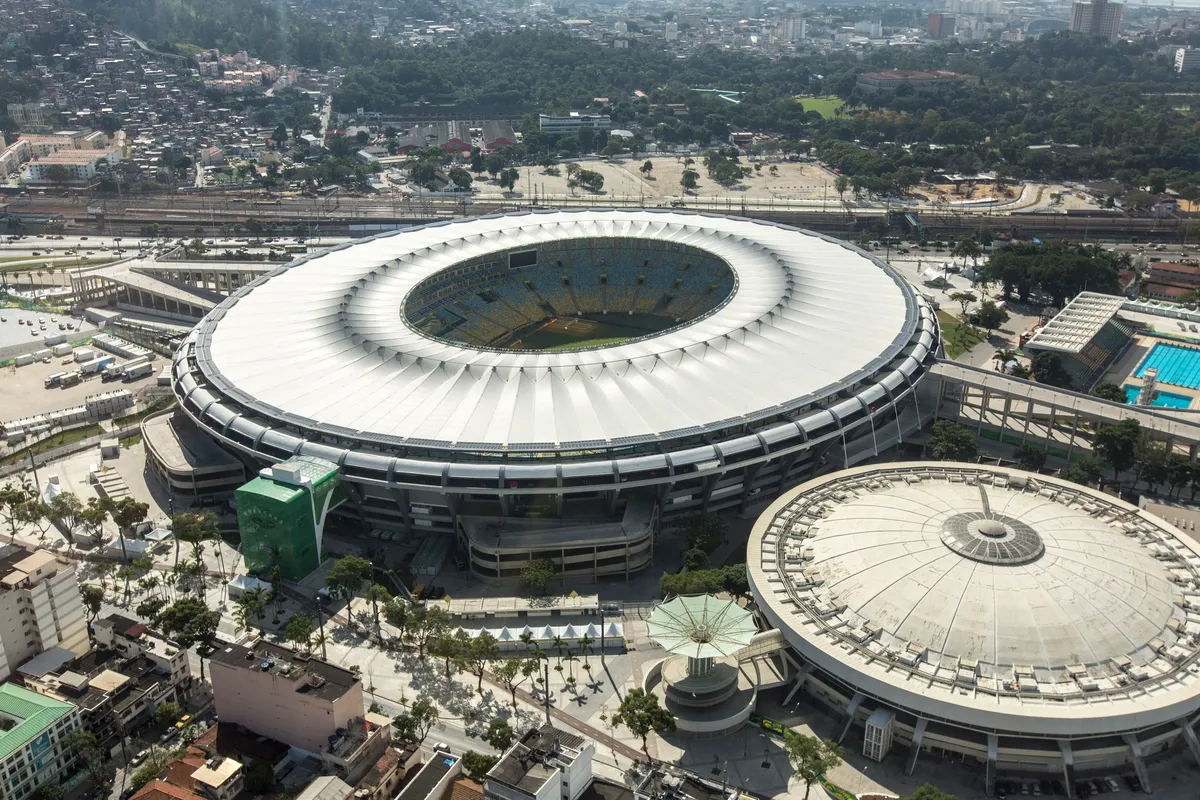
If you want to see the hosts, Brazil's three group games are already fixed: June 24 at the Maracanã in Rio, June 29 in São Paulo and July 4 in Brasília. That is five days between the first two, in cities 224 miles apart, and five days to get from São Paulo to Brasília, 542 miles (872 km) away in a straight line.
Is Salvador a good base for the Northeast?
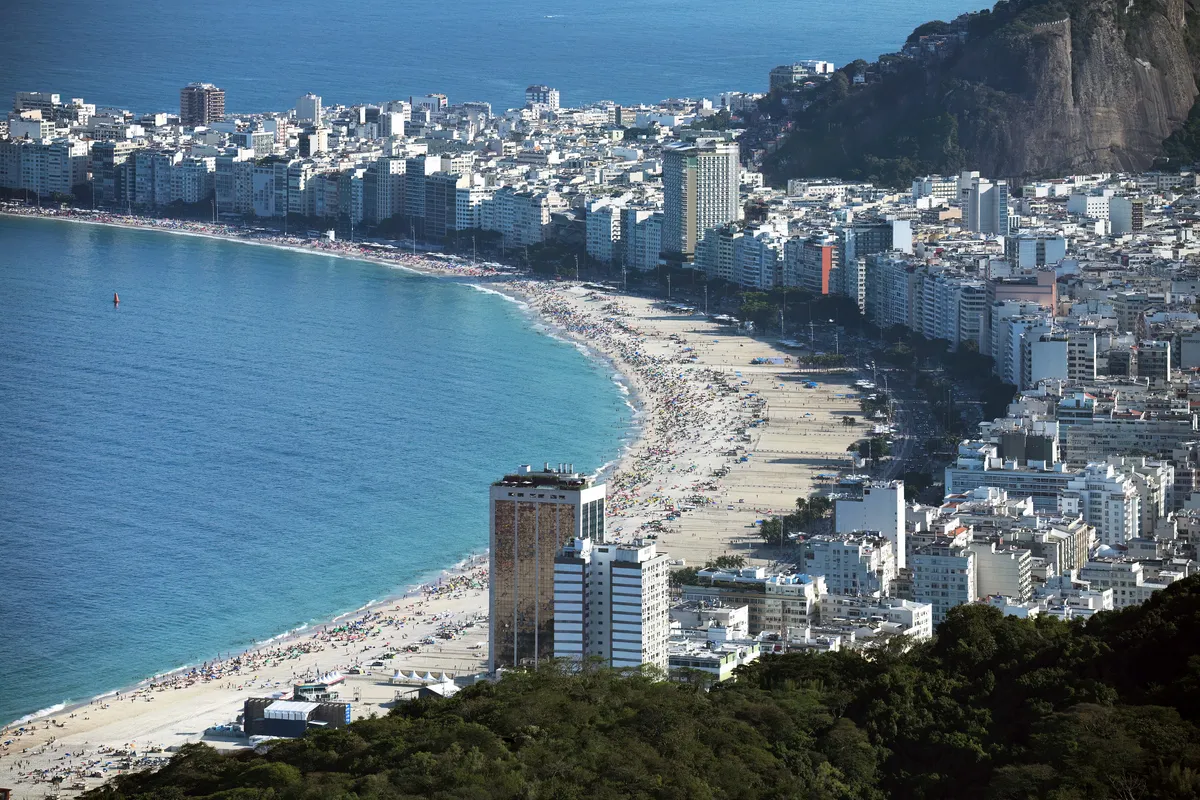
The Arena Fonte Nova hosts seven matches: six group games and one Round of 16 game on July 12. It is not a quarter-final city, so Salvador works best for fans who want the group stage and a trip to the Northeast, with Recife and Fortaleza as the next stops.
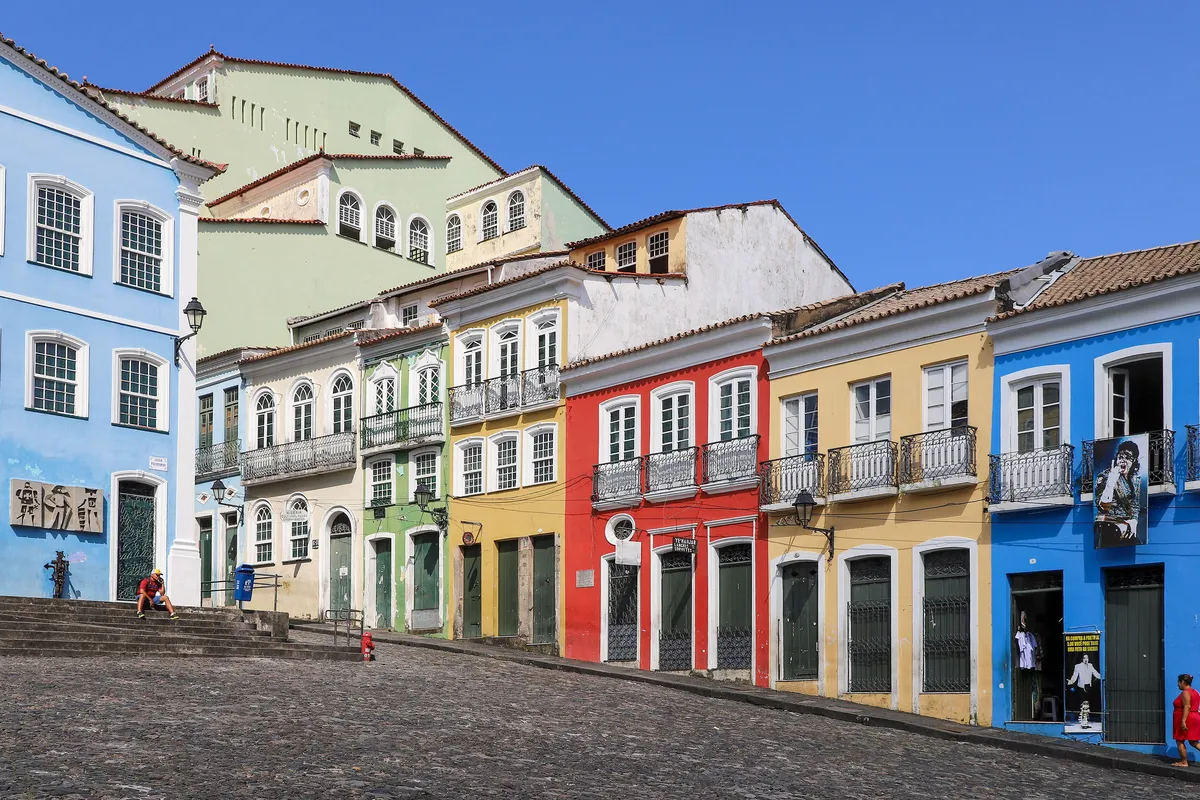
The Pelourinho, the historic center with its colorful colonial houses, is the postcard of the city. One thing to know before you book is the weather: June and July are the rainy months in Salvador, as the table below shows, so pack for rain and warm days at the same time. The full list of Salvador's dates is in the schedule guide.
What is the weather like in Brazil in June and July?
The tournament takes place in Brazilian winter, and "winter" means very different things from north to south. The table uses the climate normals from INMET, Brazil's national weather institute, for the station in each city. The numbers are monthly averages for June and July, so a single day can be warmer, cooler or wetter.
| City | Daytime high | Night low | Rain (June / July) | Days with rain (June / July) |
|---|---|---|---|---|
| Belo Horizonte | 25 °C (77 °F) | 15 °C (59-60 °F) | 11 / 5 mm | 1 / 1 |
| Brasília | 25-26 °C (78 °F) | 14 °C (57-58 °F) | 3 / 1.5 mm | 1 / 0 |
| Fortaleza | 30-31 °C (87 °F) | 23 °C (73-74 °F) | 130 / 70 mm | 10 / 7 |
| Porto Alegre | 20 °C (67-69 °F) | 10-11 °C (51-52 °F) | 130 / 164 mm | 9 / 9 |
| Recife | 28 °C (82-83 °F) | 21-22 °C (70-71 °F) | 391 / 315 mm | 22 / 23 |
| Rio de Janeiro* | 26-27 °C (79-80 °F) | 19 °C (66-67 °F) | 33-56 / 44-52 mm | 5 / 5-6 |
| Salvador | 27 °C (80-81 °F) | 21-22 °C (70-71 °F) | 238 / 194 mm | 19 / 18 |
| São Paulo | 23 °C (73 °F) | 13-14 °C (55-56 °F) | 60 / 48 mm | 5 / 4 |
Climate normals (INMET), June and July. Stations: Belo Horizonte, Brasília, Fortaleza, Porto Alegre, Recife (Curado), Salvador (Ondina) and São Paulo (Mirante de Santana), 1991-2020. *Rio de Janeiro: INMET's 1991-2020 tables have no station in the city center, so temperatures are from the 1981-2010 normals for the Rio de Janeiro station, and rain is the range of three low-lying stations in the city (Bangu, Realengo and Santa Cruz), 1981-2010. Fahrenheit is our conversion. Rain is the monthly total, June / July.
What the numbers say:
- Brasília is the driest, with almost no rain in June and July, but nights are cool at around 14 °C (57 °F).
- Recife and Salvador are the wettest, with rain on about 18 to 23 days a month, yet still warm, with highs above 26 °C (79 °F).
- Porto Alegre is the coolest, with highs around 20 °C (68 °F) and lows near 10 °C (50 °F), so bring a real jacket.
- Rio de Janeiro, São Paulo and Belo Horizonte are mild and fairly dry, with cool evenings. Rio is the warmest of the three, with highs near 26 °C (79 °F) and lows near 19 °C (66 °F).
- Fortaleza is the hottest, near 30 °C (87 °F), with rain on 7 to 10 days a month.
One note on Rio: the city's hills are wetter than its lowlands. INMET's mountain station in the Tijuca area, Alto da Boa Vista, records about 154 mm in June and 180 mm in July, so the table's Rio figures describe the lowlands around the bay, not the hills.
Is it safe to travel to Brazil for the World Cup?
The U.S. State Department gives Brazil a Level 2 advisory, "Exercise increased caution," because of crime and kidnapping. Level 2 is the second of four levels. The August 2026 version says violent crime occurs in urban areas, day and night, and it is specific about what to do. These are the points most relevant to a fan:
- Drinks. The advisory says assaults with sedatives or drugs placed in drinks are common, especially in Rio de Janeiro, and that criminals target foreigners through dating apps or at bars. Watch your drink and be careful about meeting strangers from apps.
- Cash machines. It advises using ATMs in secure places such as shopping malls or major hotels, because criminals sometimes target people leaving banks or ATMs. It also describes "express kidnapping," in which victims are forced to withdraw cash or make Pix transfers, and advises limiting the number of bank and credit cards you carry.
- Places to avoid. The advisory lists international land borders, informal housing developments (favelas and similar areas), and the satellite cities around Brasília under "Do not travel to."
That list does not name any of the eight host cities or their stadiums, and the advice above is easy to follow: a secure ATM, a drink you are watching, and few cards in your wallet. Before you go, read the current advisory in full, because it can be updated.
Do you need vaccines to travel to Brazil?
Not to enter. The CDC says yellow fever vaccination is not required to enter Brazil, but it recommends it for travelers 9 months and older going to many areas. The list includes the state of Rio de Janeiro (including the city), the state of São Paulo (including the city), the Federal District (including Brasília), Minas Gerais, where Belo Horizonte is, Rio Grande do Sul, where Porto Alegre is, and designated areas of Bahia. For travel limited to areas not on its list, it names Fortaleza and Recife as places where the vaccine is not recommended.
If you are going to Bahia, check the CDC's yellow fever map for the exact areas, since the page does not say which ones are included. The same CDC page lists other recommended vaccines and says to visit a doctor at least a month before the trip. The page I read was last updated on April 23, 2025, so check the CDC's Brazil page for any change.
What about money and language?
Brazil's currency is the real, and the language is Portuguese, in every host city. I live here, and international credit and debit cards are accepted normally. Your bank may charge foreign-transaction fees, so ask before you leave, and follow the State Department's advice on ATMs above.
Pix is Brazil's instant bank-transfer system, a bit like Zelle in the U.S. It runs through a Brazilian bank account, and opening a regular account requires a Brazilian tax number (CPF), so visitors cannot normally use it. You will not need it: cards cover most payments.
Another option is a multi-currency account with a card, such as Wise or Revolut. You hold a balance in Brazilian reais and pay with the card at any machine that takes Visa or Mastercard, with a conversion rate that is usually better than a regular bank card. These accounts do not have a Pix key, so they do not replace Pix. Keep a little cash for small purchases, and if you withdraw reais, use an ATM in a secure place, as the State Department advises, and check your card's free withdrawal limit.
For match day, the time difference with your home matters too: Brazil is one to four hours ahead of the U.S. during the tournament, and our guide to watching from the U.S. has the table.
What will be updated after the draw?
Three things change the plan: which team you follow, the kick-off times and the ticket sales. I will update this guide when the December 11 draw is done and FIFA publishes the new schedule, and when FIFA opens ticket sales. All our Brazil travel guides will be in the Brazil Fan Travel section, and the tournament guides are in World Cup 2027. More about who writes them is on the About page.
Frequently asked questions
Do U.S. citizens need a visa for Brazil in 2027?
Yes. According to the Brazilian consulate in Miami, citizens of the United States, Canada and Australia have needed an e-visa for tourism since April 10, 2025. The application is made online on brazil.vfsevisa.com, the portal the consulate names for all e-visa requests.
How much is the Brazil e-visa?
The Brazilian consulate in Miami lists a fee of US$ 80.90. Its page was last edited in May 2024, so confirm the current fee on the official portal before paying.
What is the weather in Brazil during the Women's World Cup?
It is winter. According to INMET's climate normals, June and July are dry in Brasília, mild in Rio de Janeiro, São Paulo and Belo Horizonte, hot in Fortaleza, rainy and warm in Salvador and Recife, and coolest in Porto Alegre, where nights are near 10 °C (50 °F).
Is Brazil safe for fans traveling to the World Cup?
The U.S. State Department rates Brazil Level 2 of 4, "Exercise increased caution," because of crime and kidnapping. It advises using ATMs in secure places such as malls and major hotels, watching your drinks, and avoiding informal housing developments and international land borders.
Do I need a yellow fever vaccine for Brazil?
It is not required to enter Brazil, according to the CDC, but the CDC recommends it for many areas, including Rio de Janeiro, São Paulo, Brasília, Minas Gerais and Rio Grande do Sul. It does not recommend it for trips limited to Fortaleza and Recife. The CDC page was last updated in April 2025.
Which host city is best to stay in for the 2027 Women's World Cup?
Rio de Janeiro, São Paulo and Belo Horizonte are the closest to each other and host 27 matches, including the final stretch. Salvador, Recife and Fortaleza work as a Northeast trip. The right base also depends on the team you follow, which is known after the December 11, 2026 draw.
When should I book flights and hotels for the 2027 Women's World Cup?
You can apply for the e-visa early, since the consulate's list does not require bookings. For flights and hotels, the draw on December 11, 2026 and FIFA's updated schedule with kick-off times are the points when your plan becomes clear. Ticket sales have not opened.
Sources
- Brazilian Consulate in Miami (Itamaraty): Electronic Visitor Visa (e-Visa) for U.S., Canadian and Australian citizens, read Oct. 24, 2026
- Brazil eVisa official portal (VFS Global), read Oct. 24, 2026
- U.S. Department of State: Brazil Travel Advisory, Level 2 (August 2026 update)
- CDC Travelers' Health: Brazil (yellow fever and other vaccines, updated Apr. 23, 2025), read Oct. 24, 2026
- INMET: Normais Climatológicas do Brasil 1991-2020 and 1981-2010 (maximum and minimum temperature, rainfall, days with rain), read Oct. 24, 2026
- FIFA: Tickets and hospitality, Women's World Cup Brazil 2027, read Oct. 24, 2026
- FIFA: Women's World Cup 2027 match schedule unveiled (Aug. 20, 2026)
- FIFA: Women's World Cup Brazil 2027 match schedule, PDF (version of Aug. 17, 2026)
- FIFA: Final Draw heads to Rio's Museum of Modern Art (Aug. 24, 2026)

Founder and editor, WoSo Arena
I live in Salvador, Brazil, one of the eight host cities of the 2027 Women's World Cup, and I spent five years in the United States, where girls' and women's games filled the parks and school fields of Los Angeles. Every article starts from official sources, listed at the end.