Girls' Youth Soccer
How to Choose a Girls' Soccer Club: Questions to Ask
Quick answer
Ask every club the same questions, then compare the answers on paper. Start with who coaches and what training they have, then whether adults are background-checked and SafeSport trained, how much you will play, what the travel looks like and what the fee leaves out. Search the coach in the SafeSport public database, and get the club's answers in writing.
On this page
- Who is the coach, and what training do they have?
- How do you know the club is safe?
- What should you see when you watch a practice?
- How much will you play?
- What will the schedule and the travel look like?
- What does the fee cover, and what comes on top?
- Which league and age group will you play in?
- How do you compare two clubs?
- Where does this checklist fit in the youth series?
- FAQ
- Sources
Choosing a girls' soccer club feels like choosing a team, but you are really choosing a coach, a set of safety rules, a calendar and a bill. This guide is a list of questions to ask at every club you visit, built from what U.S. Soccer, the U.S. Center for SafeSport and US Youth Soccer publish. I write "you" for whoever is choosing, the player or the adult signing the forms.
I am not a coach and I do not rank clubs. WoSo Arena is independent and has no tie to any club, league or governing body named here. I read the pages on November 3, 2026, and where I found no official rule, I say so. My parent's guide to girls' club soccer ends with a short checklist, and this article goes deeper on the parts that matter most.
Who is the coach, and what training do they have?
U.S. Soccer's coaching page describes a ladder of courses. It starts with a free online Introduction to Grassroots Coaching. To take the D course, a coach needs "at least two grassroots in-person courses and an online license," and the C course needs six months of experience after the D. Beyond that, the page says entry to the pro pathway "requires an application to each course and more robust prerequisites."
My read: a license tells you how far a coach has climbed that ladder, not whether they are good with a team of eleven-year-olds. I also found no line on that page saying a club coach must hold one, so treat it as a question, not a rule. US Youth Soccer's parent-education slides, written by the technical director of the Alabama Soccer Association, list "certification level" and "philosophy of coach, motivation skills" next to "focus on learning instead of result."
- Who coaches your age group? Ask for the names of the head coach and the assistants, and which of them runs the practices.
- What courses or licenses do they hold? Ask for the level, not just the letter, and how long they have coached this age.
- What is your coaching philosophy? US Youth Soccer's coaching manual puts this question first in its list of things to ask before you sign up.
- What does a good season look like to you? An answer that is only about the standings tells you something, given what the slides above say about learning.
How do you know the club is safe?
This is the question where I would not accept a vague answer. Start with the free tool. The SafeSport Center's Centralized Disciplinary Database (CDD) is a public list of people "currently restricted or banned" from taking part in any Olympic or Paralympic sport, and the Center says that reaches from elite level down to "a U.S. Soccer Federation-affiliated youth club." It recommends searching it before your child starts, asking the organization whether it checks the CDD before hiring staff, and checking regularly. An empty search is one check, not a clean bill of health.
Then ask what the club is required to do. The version of U.S. Soccer's Safe Soccer Framework I could read (v1.4, July 2021) says its member organizations with minor athletes must have a policy for background screening of adults who have regular contact, before that contact starts or within 45 days of taking the role. At a minimum the screening covers state sex offender registries, U.S. Soccer's disqualification list and SafeSport's disciplinary records. The same framework requires SafeSport Core training for those adults, and it counts the state associations' clubs and leagues as covered organizations.
In September 2025, U.S. Soccer also posted its Safe Soccer Clearance Program, which bundles SafeSport core training, safeguarding education, annual contact verification and a background check that meets U.S. Olympic and Paralympic Committee rules. The page says the background check costs $24 and lasts two years. I cannot tell which of the two a given club follows, so ask.
| Ask | A good answer |
|---|---|
| Are all coaches and volunteers with regular contact background-checked and SafeSport trained? | A clear yes, with a system behind it (for example the Clearance Program), not "we know our people." |
| Do you check the SafeSport database before hiring? | Yes, and again later. The Center recommends asking exactly this. |
| How do you handle one-on-one time between an adult and a player? | It has to be "observable and interruptible," in the MAAPP's words, with a written policy. |
| Are parents copied on messages from coaches to players? | Yes. The MAAPP says a parent, another family adult or another adult participant "must be included on all electronic communications." |
| Do you need my consent for individual training, rides and hotel rooms? | Yes, with a consent form, and parents may watch individual sessions. |
| Where do I report a concern? | A named person at the club, plus the outside routes: U.S. Soccer's reporting page and the SafeSport Center's report form. |
Safety questions to ask a club, and what a good answer sounds like. Sources: SafeSport Center parents page and MAAPP parents page; U.S. Soccer Safe Soccer Framework (v1.4) and Clearance Program page; read Nov. 3, 2026.
One caution on that table: the Center says the MAAPP is required of certain adults in the Olympic and Paralympic movement and "recommended, but not required" outside it, so the club's answer on its own policy matters more than my table. I would take a club that shows you its policy over one that tells you it is "covered."
What should you see when you watch a practice?
If the club lets you watch a session, bring the same short list each time. US Youth Soccer's slides put "no lines/lectures/laps" under coach effectiveness, which in plain terms means players should be touching the ball and playing small games, not standing in a queue. The parents' pages of the SafeSport Center add four signs of a potentially unsafe environment:
- Behavior expectations are unclear, inconsistently applied or missing.
- Policies to prevent abuse are "ignored or downplayed" by coaches and staff.
- Disrespect toward officials, opponents or spectators is tolerated.
- Player safety, growth and well-being are "sacrificed for the sake of winning."
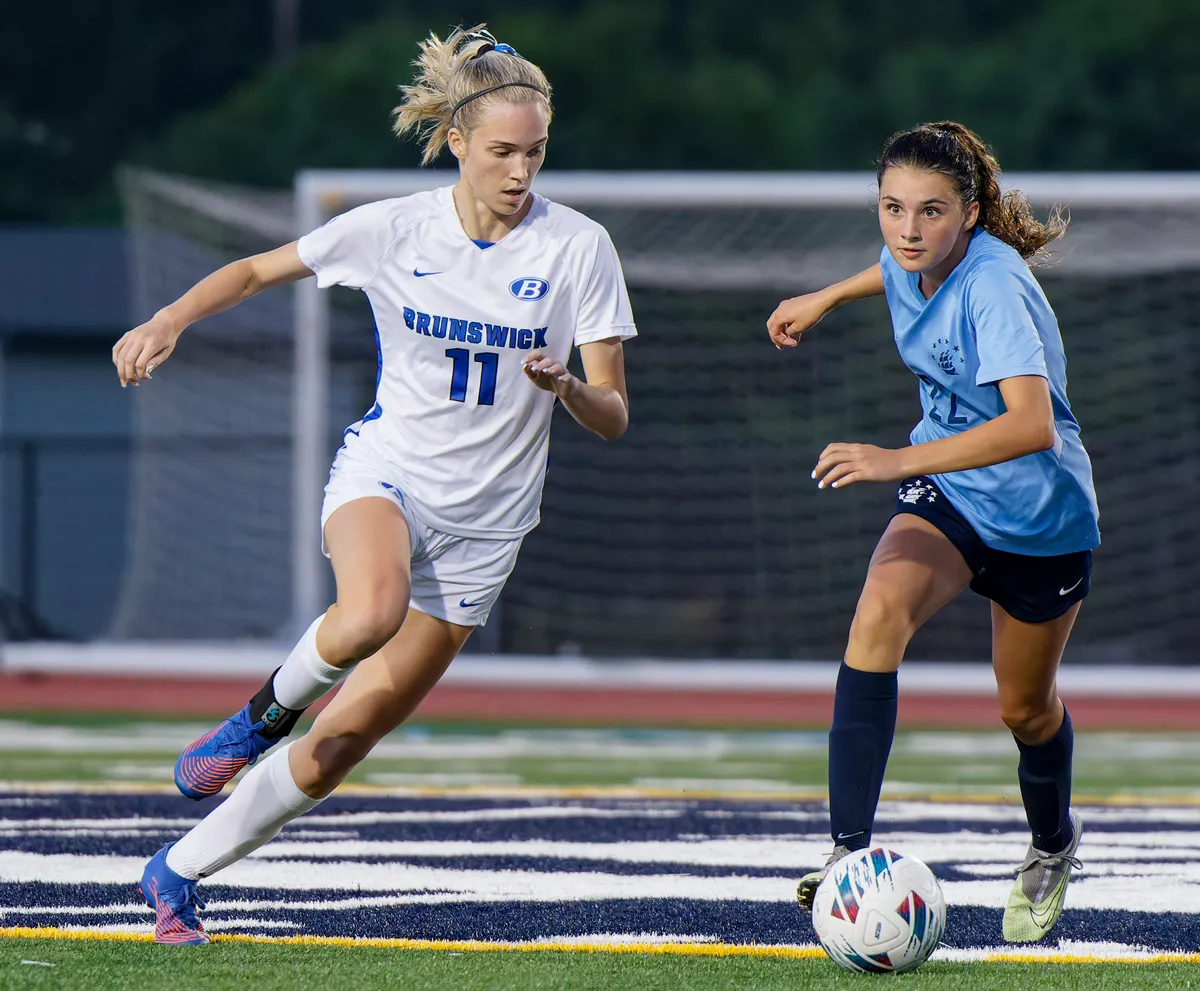
The MAAPP also says parents must be allowed to watch their child's individual training sessions. For team practices I found no national rule, so ask the club what its visitor policy is. A club that welcomes you at the touchline is giving you information before you pay.
How much will you play?
Playing time is the question families are most likely to feel awkward asking. US Youth Soccer's coaching manual, in a 2008 edition, lists it plainly among the things to ask before you enroll: "Will my son/daughter play as much as the others?" The parent-education slides list "playing time" under ethical issues, beside "best interest of the individual players." The sources I read do not set a national rule, so the club's own policy is the answer.
- How is playing time decided at this age? Ask whether it is equal for everyone, based on effort, or based on results.
- How big is the roster, and how many players start? A big roster with a fixed starting group tells a different story from a small one that rotates.
- How are teams chosen and placed? Ask how tryouts and evaluations work, who runs them and when a player can move up or down.
- When will you hear if something is wrong? Ask how the coach talks to a player who is not getting minutes, and when.
What will the schedule and the travel look like?
Travel is where a club's real cost and real time commitment live. Ask for the full season calendar before tryouts, not a promise that it will come later. In my budget guide, Project Play reports that families spend an average of $260 per child per sport per year on travel, and that average includes families who are not on travel teams. A travel-team family will usually be above it.
- How many practices a week, and where? Ask how far the fields are from where you live and whether the location changes in winter.
- How far are league games? Ask for the longest regular-season trip, not the average one.
- How many tournaments, and who pays for what? Ask whether hotel stays are required and who covers the coach's travel.
- What happens if school and club collide? Ask for the answer in writing. My guide to high school and club soccer lists the questions for that conversation.
What does the fee cover, and what comes on top?
A club's fee is rarely the whole bill. In the budget guide, one ECNL fee sheet came to $4,097 once registration, a safety fee, a video fee and the kit were added, and that was before any travel. Ask for every charge in writing, so you can compare two clubs line by line.
- What does the fee include? Ask about training, uniform, tournament entries, coach travel and any fees paid to a league or platform.
- What is billed separately? Ask about kit, team fees, hotel rooms and any volunteer or fundraising requirement.
- What is the refund policy? In the fee sheets I read, Utah Celtic lists all fees as non-refundable and Davis Legacy does not waive fees for a player who leaves mid-season.
- Is there financial aid, and what does it cover? Ask whether it reaches travel and tournaments, not just the base fee. My budget guide has the details.
Which league and age group will you play in?
The same question has to be answered at every club, because clubs do not all play in the same place. Ask which league the team plays in and which age group you would be placed in. Since the 2026-27 season, most age groups follow the school year instead of the calendar year, so confirm which group you land in. My guide to birth year or school year explains how the cutoff works. If the club mentions ECNL or Girls Academy, the league comparison shows what each one publishes. Also ask whether the club is a member of your state association, because that is what puts it under U.S. Soccer's safety framework.
How do you compare two clubs?
Put the answers side by side. Write the questions in the first column and each club's answers in the next, with the date and the person who said it. I would send the questions by email and keep the replies, because a written answer is easy to compare and easy to point back to later. If a club does not want to answer in writing, that is also an answer.
Do not expect one club to win every row. A club that is cheaper may travel less, or a club with stronger coaching may ask for more of your calendar. The point of the list is to make those trade-offs visible before you pay.
Where does this checklist fit in the youth series?
It is the "visit day" piece of the Girls' Youth Soccer section: read the pillar guide to learn the levels and the cost guide to price them, then bring these questions to the clubs. Once your player is older, the college recruiting timeline shows where the club choice leads. I will update this page when U.S. Soccer or the SafeSport Center change the pages I quote.
Frequently asked questions
How do you choose a girls' soccer club?
Ask every club the same questions and compare the answers on paper: who coaches and what training they have, whether adults are background-checked and SafeSport trained, how much you will play, what the schedule and travel look like, and what the fee leaves out. Get the answers in writing before you pay.
What should you ask a youth soccer coach before joining a club?
Ask for the coach's name, courses or license level, coaching philosophy and what a good season looks like. US Youth Soccer's coaching manual lists the coach's philosophy first among the questions parents should ask, and its parent-education slides add playing time and "focus on learning instead of result."
Does a youth soccer coach need a U.S. Soccer license?
I did not find a rule saying so on U.S. Soccer's coaching page. It describes a ladder of courses that starts with a free online introduction and leads to the D and C licenses. A license shows how far a coach has gone on that ladder, so ask which one each coach holds.
How can you check that a youth soccer club is safe?
Search the coach and staff in the SafeSport Center's public disciplinary database, and ask the club whether it does the same before hiring. Then ask whether adults are background-checked and SafeSport trained, how one-on-one contact and messages are handled, and where to report a concern.
What is the SafeSport disciplinary database?
It is a public database of people currently restricted or banned from taking part in any Olympic or Paralympic sport, which the SafeSport Center says includes U.S. Soccer-affiliated youth clubs. The Center recommends searching it before your child starts and checking it regularly.
Do youth soccer clubs guarantee playing time?
The sources I read do not set a national rule, so it depends on the club. US Youth Soccer's parent-education slides list playing time as an ethical issue to weigh, and its coaching manual suggests asking whether your child will play as much as the others. Ask for the club's policy for your age group.
What should a club tell you before you pay?
The coaches' names and training, how adults are screened and trained for safety, the league and age group, the full season calendar, every fee and what is billed separately, and the refund policy if a player leaves. Ask for it in writing so you can compare two clubs.
Sources
- U.S. Soccer: Coaching Education, Coaching License Pathway, read Nov. 3, 2026
- U.S. Soccer: Safe Soccer Clearance Program (Sept. 30, 2025), read Nov. 3, 2026
- U.S. Soccer: Safe Soccer Framework, v1.4 (July 28, 2021, PDF), read Nov. 3, 2026
- U.S. Center for SafeSport: Helping Parents Prevent Abuse, read Nov. 3, 2026
- U.S. Center for SafeSport: Centralized Disciplinary Database
- U.S. Center for SafeSport: Minor Athlete Abuse Prevention Policies, for parents, read Nov. 3, 2026
- US Youth Soccer: The Official US Youth Soccer Coaching Manual (2008 edition, PDF), read Nov. 3, 2026
- US Youth Soccer: A Curriculum for Parent Education (slides, Alabama Soccer Association, undated PDF), read Nov. 3, 2026

Founder and editor, WoSo Arena
I spent five years in the United States, where girls' and women's games filled the parks and school fields of Los Angeles. Every article starts from official sources, listed at the end.