Girls' Youth Soccer
Girls' Club Soccer in the U.S.: How It Works for Parents
Quick answer
Girls' club soccer in the U.S. has levels: recreational leagues where everyone who signs up plays, travel or club teams that play tournaments and cups, and elite leagues such as ECNL and Girls Academy. Since August 2026, most age groups run August 1 to July 31, matching school grades, so check your daughter's group before any tryout.
On this page
- What are the levels of girls' soccer in the U.S.?
- What age group will your daughter play in?
- How much does girls' club soccer cost?
- Can a girl play club soccer and high school soccer?
- What is ODP, and is it the same as ECNL or GA?
- How do you choose the right level for your daughter?
- What comes next in this guide series?
- FAQ
- Sources
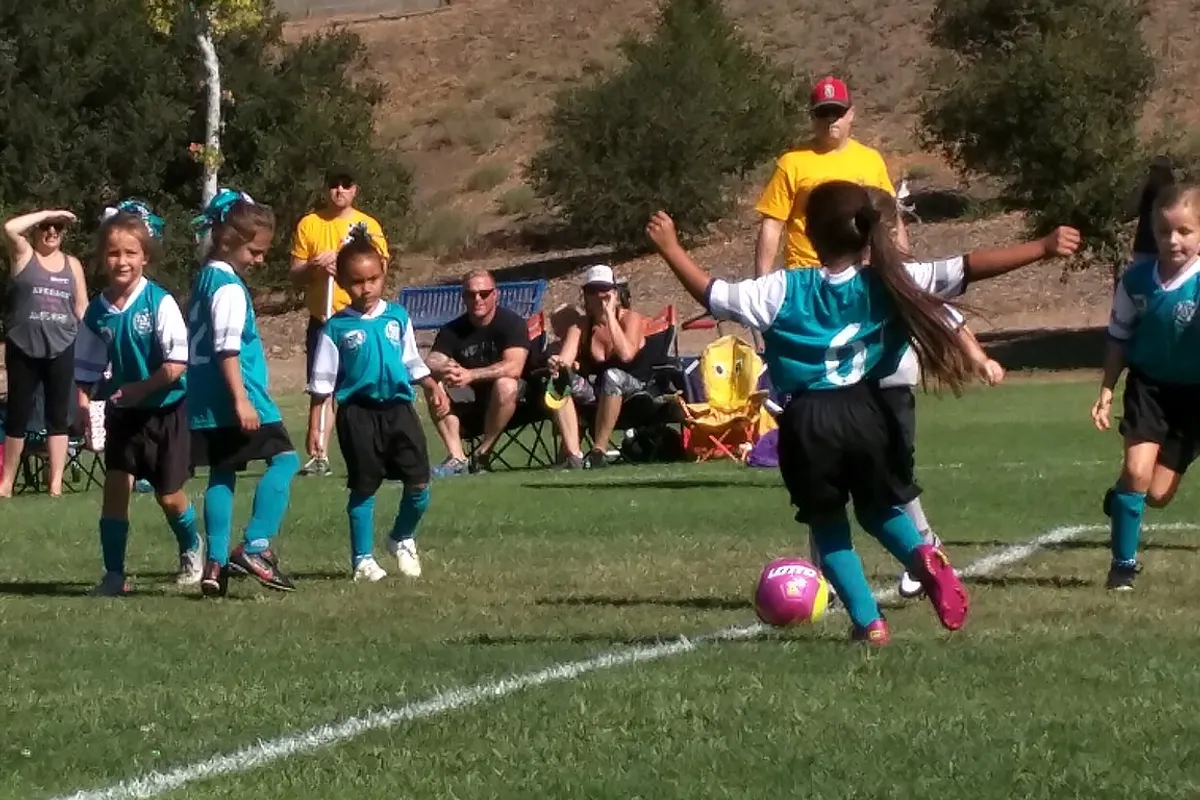
When I lived in Los Angeles, I saw girls playing soccer in parks and school yards almost every weekend. What I never saw was the system behind it: which teams are for fun, which ones travel, and what ECNL or "GA" means on a jersey. I am not a coach or a former player, so this guide sticks to what the official sources say, and it tells you when a number is missing.
It is the starting point for the rest of our Girls' Youth Soccer section. This site is independent and not affiliated with U.S. Soccer, ECNL, Girls Academy or any club named here. If the 2027 Women's World Cup is what got your daughter interested, the tournament schedule and the guide to watching it from the U.S. are a good place to start.
What are the levels of girls' soccer in the U.S.?
US Youth Soccer, the largest youth organization, says it has 2.5 million registered players a year and 54 state associations, with programs "ranging from recreational to competitive." Inside that system, the state associations and leagues describe the levels in similar ways. The table puts the official wording next to one real example of what a club charges.
| Level | What the official sources say | Example from one club |
|---|---|---|
| Recreational | "A program based on the recreational play philosophy." Teams play teams from other organizations. | All players who sign up play. Volunteer parent coaches, no standings or postseason, most teams practice once a week for 1 to 2 hours. $190 to $200 per child per season, plus uniform. |
| Travel or club | "A program with two or more teams based on a competitive play philosophy." Qualifies teams for tournaments and for US Youth Soccer and state cup play. | Teams placed by skill level, professional coaches, play all year. "Average cost per year $2500." |
| ECNL (Girls) | Three levels on the official site: ECNL, ECNL Regional League and Pre-ECNL. National champions were crowned in 2026 in six age groups, U13 through U18/19. | The league pages I read list no fee. Fees are set by each club. |
| Girls Academy (GA) | Calls itself "the leading youth development platform for the best female soccer players in the United States." Teams in U13 to U19, over 120 member clubs in eleven conferences in 2025/26. Inspire (U11 and U12) and Aspire, a second tier launched in February 2025, sit around it. | The league pages I read list no fee. Fees are set by each club. |
Levels of girls' soccer. Definitions: Eastern Pennsylvania Youth Soccer (a US Youth Soccer state association), ECNL and Girls Academy websites. Example: one Los Angeles-area club's FAQ (LAFC SoCal Youth). All read Oct. 24, 2026. The fees are one club's, not a national average.
A few things worth knowing before you compare:
- Recreational is its own world. The Eastern Pennsylvania association says recreational play does not qualify a team for travel tournaments or for US Youth Soccer and state cup play. That is not a downside: it is a different goal.
- "Club" often means many levels in one place. A single club can run recreational teams, travel teams and a team in ECNL or GA.
- Two of the names are leagues, not clubs. ECNL and Girls Academy are leagues that clubs join. Your daughter plays for a club, and the club decides which league to enter.
What age group will your daughter play in?
This is the part that changed this year. For almost a decade, U.S. youth soccer grouped players by calendar birth year, January 1 to December 31. In June 2025, US Youth Soccer, AYSO and US Club Soccer announced a move to a seasonal year that runs August 1 to July 31, starting with the 2026-27 season. The stated goal is to line players up with their school-grade classmates. The 2025-26 season was unchanged, so this is the first season under the new model, and the change applies to US Youth Soccer league and cup competitions.
U.S. Soccer, the national federation, now lets each member set the age group rules for the leagues and competitions it runs, and it released a tool that shows age groups by birthdate. One club's summary of the change says ECNL and Girls Academy follow the same cycle, and ECNL's parents page links to a birth year and season matrix, so check the matrix for your league.
| Age group | Born between |
|---|---|
| U8 | Aug 1, 2018 and Jul 31, 2019 |
| U9 | Aug 1, 2017 and Jul 31, 2018 |
| U10 | Aug 1, 2016 and Jul 31, 2017 |
| U11 | Aug 1, 2015 and Jul 31, 2016 |
| U12 | Aug 1, 2014 and Jul 31, 2015 |
| U13 | Aug 1, 2013 and Jul 31, 2014 |
| U14 | Aug 1, 2012 and Jul 31, 2013 |
| U15 | Aug 1, 2011 and Jul 31, 2012 |
| U16 | Aug 1, 2010 and Jul 31, 2011 |
| U17 | Aug 1, 2009 and Jul 31, 2010 |
Age groups for the 2026-27 season under the August 1 to July 31 cycle. Source: a youth soccer organization's published table (SOCA, Charlottesville, Virginia), which applies the joint announcement. Individual leagues can differ, so confirm with your club.
An example makes it concrete: a girl born in April 2015 is in U12 this season, and a girl born in September 2015 is in U11. Under the old calendar-year model, both were the same age group. Some players moved up or down a group at 2026 tryouts, which is why clubs spent the summer re-sorting rosters. Players can still choose to play with an older group if they want to.
One more point from the record: the first announcement, in March 2025, gave a September 1 start date. The final June 2025 decision is August 1, which is the one clubs now use.
How much does girls' club soccer cost?
It depends on the level more than anything else, and the official numbers I can verify are limited. The Aspen Institute's Project Play, which studies youth sports, reports that the average family paid $883 for one child's primary sport in 2022. Its facts page lists soccer at $1,188 on average, above basketball ($1,002), baseball ($714) and tackle football ($581), though that page does not say which year the soccer figure comes from. It also names travel as the costliest part of youth sports, at $260 per sport per child on average.
Project Play has no cost figure for girls only, so I will not invent one. What the table above shows is the gap between levels at one club: about $200 a season for recreational, and an average of $2,500 a year for competitive, before tournaments and travel. Elite leagues publish no fee, because clubs set their own. I will go through a full parent budget in a separate guide.
Can a girl play club soccer and high school soccer?
High school soccer is big on its own. The National Federation of State High School Associations counted 393,048 girls playing high school soccer in 2024-25, the third most popular girls' sport after outdoor track and field (513,808) and volleyball (492,799). Across all sports, a record 8,266,244 students took part.
Whether a club player can also play for her school is a different question, and I did not find an official ECNL or Girls Academy rule that answers it. The honest answer is to ask the club in writing and to check your state high school association, since schools and states set their own rules.
What is ODP, and is it the same as ECNL or GA?
No. The Olympic Development Program, ODP, is a US Youth Soccer program that state associations run (Eastern Pennsylvania, for example, has its own ODP page). It is not a club league. Its top players are picked for national select teams that play internationally: US Youth Soccer announced the 2026 Girls ODP National Select Teams in February 2026, with one roster for each birth year from 2008 to 2013. The players came from ECNL, Girls Academy and the US Youth Soccer National League, which shows that the programs overlap. Your state association is the place to ask about local ODP dates.
How do you choose the right level for your daughter?
I am not a coach, so I will not tell you which league is best. What I would do is ask the same questions at every club you visit and compare the answers on paper:
- Which age group is she in this season? Make sure the club is using the August 1 to July 31 cycle for her league.
- What does the fee include? At the recreational club above, it covered a medal, pictures, field permits, insurance and equipment, with the uniform extra.
- How often does the team practice and where does it play? Travel is the largest cost in Project Play's data, so a team that flies to tournaments is a different budget from one that stays in the county.
- Who coaches the team? At the recreational club above the coaches are volunteer parents and the competitive teams have professional coaches. Either way, ask for the coach's name and experience.
- Which league does the team play in, and for how long is the commitment? Ask about the season length, tournaments and what happens if your daughter wants to switch.
- Can she also play for her school? Get the answer in writing, as above.
Starting at the recreational level is not a wrong turn. It is the lowest-cost way to see whether she wants more practices, and a girl who is having fun is the best sign you can have. If she asks for more, the travel and elite levels are there.
What comes next in this guide series?
This is the pillar guide of our Girls' Youth Soccer section. Separate guides will cover the budget line by line and how ECNL and Girls Academy compare. The numbers on this page will be updated when leagues publish new rules. You can read more about the person writing them on the About page, and how we check sources on How we write.
Frequently asked questions
What is the difference between recreational and travel soccer for girls?
Recreational soccer is built around playing for fun: at one Los Angeles-area club, everyone who signs up plays, coaches are volunteer parents and there are no standings. Travel or club soccer is built around competition, with teams that play tournaments and state cups. The same club lists an average cost of $2,500 a year for competitive soccer.
What are ECNL and Girls Academy?
They are two national leagues for elite girls' club teams. ECNL has three levels: ECNL, ECNL Regional League and Pre-ECNL. Girls Academy runs teams from U13 to U19, with over 120 member clubs in 2025/26, plus Inspire for U11 and U12 and a second tier called Aspire. Clubs join the leagues, and each club sets its own fees.
How do youth soccer age groups work in 2026-27?
US Youth Soccer, AYSO and US Club Soccer moved to a seasonal year of August 1 to July 31, starting with the 2026-27 season, to match school grades. Under that cycle, a U12 player was born between August 1, 2014 and July 31, 2015. Confirm your league's rule, because U.S. Soccer lets each member set its own.
How much does girls' club soccer cost?
Project Play reports an average of $883 a year for one child's primary sport in 2022 and lists soccer at $1,188. At one Los Angeles-area club, recreational soccer is about $200 a season plus uniform and competitive is an average of $2,500 a year. Travel is the costliest part of youth sports, at $260 per child per sport on average.
Can a girl play both club and high school soccer?
It depends on the club and the state. I did not find an official ECNL or Girls Academy rule on it, so ask the club in writing and check your state high school association. High school soccer is popular: 393,048 girls played in 2024-25, according to the NFHS.
What is ODP in youth soccer?
The Olympic Development Program is a US Youth Soccer program run through its state associations, not a club league. In 2026, US Youth Soccer named Girls ODP National Select Teams for the birth years 2008 to 2013, with players from ECNL, Girls Academy and its own National League.
At what age should a girl start club soccer?
The sources I read give no single official starting age. Recreational programs start with the youngest groups, and Inspire, the Girls Academy entry level, begins at U11. A common path, and the one I would suggest, is to start in a recreational league and move to a travel team when she asks for more practices.
Sources
- US Youth Soccer: About (2.5 million registered players, 54 state associations), read Oct. 24, 2026
- Eastern Pennsylvania Youth Soccer: Levels of Competition (travel, recreational, intramural), read Oct. 24, 2026
- Eastern Pennsylvania Youth Soccer: Age Group Formation, 2026-27 season, read Oct. 24, 2026
- Cal North, joint statement by US Youth Soccer, AYSO and US Club Soccer on age group formation (June 10, 2025)
- SOCA: 2026-2027 age group information and birth date table, read Oct. 24, 2026
- LAFC SoCal Youth: Recreational FAQ (recreational vs. competitive, fees), read Oct. 24, 2026
- ECNL Girls: levels, 2026 national champions, read Oct. 24, 2026
- ECNL: parents page (age division and birth year matrix link), read Oct. 24, 2026
- Girls Academy: About (age groups, member clubs, conferences), read Oct. 24, 2026
- Girls Academy: ASPIRE launch announcement (Feb. 17, 2025)
- Aspen Institute Project Play: youth sports facts, cost (State of Play 2022), read Oct. 24, 2026
- NFHS: High school sports participation, 2024-25 survey (Sept. 9, 2025)
- SoccerWire: US Youth Soccer Girls ODP National Select Team rosters for 2026 (Feb. 21, 2026)

Founder and editor, WoSo Arena
I live in Salvador, Brazil, one of the eight host cities of the 2027 Women's World Cup, and I spent five years in the United States, where girls' and women's games filled the parks and school fields of Los Angeles. Every article starts from official sources, listed at the end.